
Kojic Acid for Melasma: Your Practical Guide to Clearer Skin
- Web Dev
- Nov 1, 2025
- 12 min read

Living with melasma can feel like an endless, frustrating cycle. You try different products, hope for the best, but those stubborn dark patches remain. What if I told you there's a gentle yet powerful ingredient that could change the story for your skin? It's called kojic acid, and this guide is your practical first step towards understanding how it can help you regain the clear, confident complexion you deserve.
Your Roadmap to a Clearer Complexion
I understand how disheartening the persistent patches from melasma can be. Taking back control starts with understanding your options, and kojic acid—a natural ingredient derived from the fermentation process of Japanese sake—offers a kinder approach. Forget harsh chemicals; this is a nature-inspired solution that helps calm down overactive pigment cells.
Let's be clear: kojic acid doesn't bleach your skin. Not at all. Think of it more like a peacekeeper. It works behind the scenes to address the root cause of the discolouration by gently telling your skin's pigment-producing signals to calm down. This means it not only helps prevent new patches from forming but also gives existing ones a chance to fade naturally as your skin renews itself.
Why Kojic Acid Is a Trusted Choice
Here in the UK, skincare professionals often recommend kojic acid as a topical treatment for managing melasma. Its real strength is its ability to inhibit tyrosinase—the main enzyme that triggers melanin production. In simple terms, it gently applies the brakes to your skin’s pigment-making process, helping to lighten dark areas safely and effectively.
This focus on gentle inhibition is what makes it such a great starting point for anyone wanting a more balanced complexion without resorting to aggressive treatments. It's all about working with your skin, not against it.
Your skincare journey is personal. It's about finding what makes you feel confident in your own skin. Choosing an ingredient like kojic acid is a positive, proactive step towards achieving the complexion you've been hoping for.
The best way to begin is with professional, personalised advice. You might consider booking a free skin consultation to get insights tailored specifically to your skin's needs. Let this guide be your foundation, empowering you to move forward with hope and clarity.
How Kojic Acid Calms Pigmentation
To truly understand what kojic acid does, let's simplify the science. Imagine your skin's pigment-producing cells—the melanocytes—are tiny factories. When you have melasma, these factories are in overdrive, working 24/7 and churning out way too much pigment. This is what creates those dark patches.
This is where kojic acid steps in. It doesn't shut the factory down completely, because your skin needs some pigment for protection. Instead, it acts like a calm supervisor, gently telling the factory to slow production and bring everything back into balance.
Kojic acid achieves this by interacting with a key enzyme called tyrosinase. Think of tyrosinase as the factory's star employee, responsible for creating melanin (your skin's pigment). When tyrosinase is overactive, pigmentation runs wild. Kojic acid gently but effectively puts the brakes on this enzyme, telling it to ease up.
The Science Behind the Soothing
This clever process is incredibly precise. Kojic acid works by binding to the copper ions that the tyrosinase enzyme needs to function. By removing this crucial component, it effectively pauses the melanin production line before it even gets going.
It’s this gentle intervention that makes using kojic acid for melasma such a positive experience. It gives your skin the breathing room it needs to repair and rebalance itself.
By calming the source of the problem, kojic acid doesn't just lighten the patches you can see; it helps stop new areas of hyperpigmentation from forming. This dual action is your secret weapon for achieving long-term clarity and a more even skin tone.
How This Process Unfolds on Your Skin
When you start using a kojic acid product, you're kicking off a gradual renewal process. The acid works to prevent new, excess pigment from being deposited into your skin's top layers. Then, as your skin naturally sheds old cells, the new, less-pigmented cells underneath are slowly revealed. This is what leads to the visible fading of your melasma patches over time.
This targeted approach offers some fantastic benefits for you:
Prevents New Patches: By controlling melanin production at the source, it helps stop melasma from spreading or getting darker.
Fades Existing Marks: It works with your skin’s natural turnover cycle to reveal a clearer, more even complexion.
Offers a Gentle Alternative: Unlike some harsher treatments, kojic acid works in harmony with your skin’s biology to restore balance, which means less risk of irritation for you.
Understanding what’s causing the issue is always the first step. If you'd like to learn more, our guide on what causes hyperpigmentation on the face is a great place to start. Visualising this calming process can give you the confidence to trust in kojic acid’s ability to guide your skin back to a brighter, more balanced state.
Building Your Kojic Acid Skincare Routine
Adding a powerful new ingredient to your skincare lineup shouldn’t feel complicated. It's about being smart, listening to your skin, and making choices that support your goal of a clearer complexion.
First, you need to choose the right product for you. You'll find kojic acid in everything from cleansers to serums and creams. For tackling melasma effectively, your best bet is a serum or cream. These products are designed to stay on your skin, giving the active ingredient the time it needs to penetrate and get to work where it matters most.
When you're looking at labels, aim for a concentration between 1% and 2%. This is the sweet spot—effective enough to make a real difference to hyperpigmentation but gentle enough to minimise the risk of irritation. It's the perfect place for you to start.
This simple visualisation shows how kojic acid works to calm overactive pigment production in your skin.As you can see, kojic acid essentially acts like a calm, steady hand, gently telling the melanin-producing cells to slow down, which helps to even out your skin tone.
How to Start Your Routine Safely
Before you apply kojic acid to your face, you must do a patch test. This simple step is your best defence against potential irritation. It’s easy to do.
Pick a discreet spot: Apply a small amount of the product somewhere hidden, like behind your ear or on your inner wrist.
Wait and watch: Give it 24 to 48 hours. If you don’t experience any redness, itching, or irritation, you’re ready to proceed.
Start slow: Begin by using your kojic acid product just two or three times a week at night. This lets your skin get used to it. If your skin is happy after a couple of weeks, you can gradually increase to daily use.
Powerful Ingredient Pairings
Kojic acid is great on its own, but it becomes a superstar when paired with the right teammates. Combining it with supportive ingredients can create a powerful synergy, helping you reach your skin goals faster.
Niacinamide: This is an excellent partner for kojic acid. It’s a soothing vitamin that strengthens your skin's barrier, calms inflammation, and helps even out skin tone, complementing kojic acid’s work without causing irritation.
Vitamin C: Another brilliant brightener, Vitamin C is an antioxidant powerhouse that helps protect your skin from environmental stressors that can worsen melasma. A practical approach is to use your Vitamin C in the morning and save kojic acid for your evening routine. You can discover more about how a vitamin C serum for dark spots can support your journey.
Hyaluronic Acid: Since kojic acid can sometimes be slightly drying, pairing it with this hydration hero is a smart move. It pulls moisture into your skin, keeping it feeling plump, comfortable, and hydrated.
A Word of Caution: Be careful when mixing kojic acid with other strong actives like retinoids (retinol) or alpha-hydroxy acids (AHAs) such as glycolic acid. While they can be in the same routine, it's best to use them on alternate nights. Using them together at the same time can overwhelm your skin and lead to sensitivity.
Sample Kojic Acid Skincare Routine
Here is a practical, sample routine to show you how to layer kojic acid effectively and safely into your daily life.
Time of Day | Step | Product Example | Key Tip for Melasma |
|---|---|---|---|
Morning | 1. Cleanse | Gentle, hydrating cleanser | Start with a clean canvas without stripping your skin. |
Morning | 2. Brighten | Vitamin C Serum | Provides antioxidant protection against daily UV damage. |
Morning | 3. Hydrate | Hyaluronic Acid Serum/Moisturiser | Plumps your skin and keeps it hydrated all day. |
Morning | 4. Protect | Broad-Spectrum SPF 50+ | This is non-negotiable. Protects against your #1 melasma trigger. |
Evening | 1. Cleanse | Gentle cleanser | Removes makeup, SPF, and impurities from the day. |
Evening | 2. Treat | Kojic Acid Serum (1-2%) | Apply to a dry face, focusing on pigmented areas. |
Evening | 3. Soothe | Niacinamide Moisturiser | Calms your skin and supports its natural barrier. |
Evening | 4. Nourish | Rich, hydrating night cream | Locks in moisture and helps your skin repair overnight. |
Remember, this is just a template. The most important thing you can do is listen to your skin and adjust as needed. Consistency is what will bring you the results you're looking for.
Setting Realistic Expectations for Your Journey
Starting with kojic acid is an exciting, hopeful step. But it's crucial to approach it with the right mindset: managing melasma is a marathon, not a sprint. We're not looking for an overnight fix. Instead, this is about a gradual, rewarding journey of bringing your skin back into balance. Real, lasting change takes time.
Think of it like tending a garden. You plant a seed and don't expect a perfect flower the next day. You water it, nurture it, and give it time. Similarly, when you use kojic acid for melasma, you are patiently creating the right conditions for your skin to heal. The improvements you want will happen step-by-step, not all at once.
This is your personal journey, so your timeline will be unique. While you might notice a gentle brightening effect within the first four to six weeks, you'll likely see more significant fading of melasma patches after two to three months of consistent use.
Understanding the Timeline
Patience is your best friend here. The most profound results often take six months or longer to appear. How quickly you see progress depends on how deep your melasma is, the product you're using, and—most importantly—your absolute dedication to daily sun protection.
Clinical studies support this. A report from the UK Dermatology Clinical Trial Network found that participants in a comprehensive treatment plan, often including ingredients like kojic acid, saw significant improvement after 24 weeks. On average, their pigmentation scores dropped by around 30%. This shows that sticking with your routine is what truly delivers results. You can read more about the study's findings on pigmentation treatments if you'd like to learn more.
Navigating Common Experiences
As your skin adapts to a new active ingredient, you might encounter a few minor bumps in the road. This is completely normal. Knowing what to expect can help you stay on track without feeling discouraged.
Initial Dryness or Flaking: Kojic acid can be a bit drying at first. The simple fix is to follow up with a good, hydrating moisturiser. Look for ingredients like hyaluronic acid or ceramides to keep your skin comfortable.
Mild Sensitivity or Tingling: A slight tingling sensation is common when you first introduce an active ingredient. This usually subsides as your skin builds tolerance. If it feels like too much, drop back to using it every other night for a while.
The Plateau Phase: It’s very common to see some good initial progress, then feel like things have stalled. Don't lose heart! This is often just your skin stabilising before the next wave of improvement. Keep going.
Your journey with melasma is about more than just fading spots; it's about feeling good in your skin again. Celebrate the small wins, like a slightly brighter tone or a patch that looks a little less defined. Trust the process.
Remember, consistency is far more powerful than intensity. By understanding the road ahead, you can navigate each stage with confidence, knowing you’re on the right path to the even-toned skin you deserve.
Using Kojic Acid Safely and Smartly
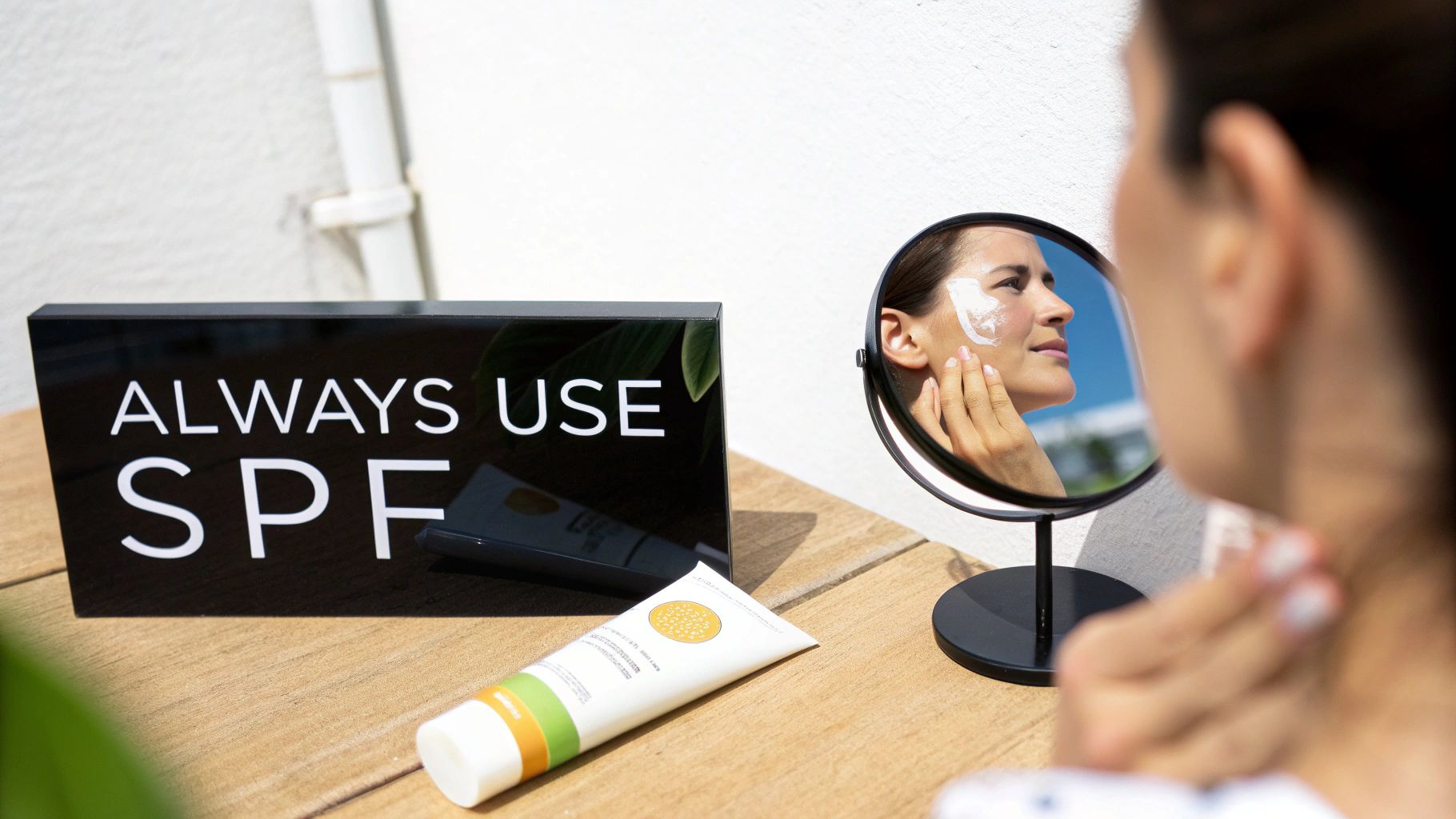
Your skin's health and comfort should always be your top priority. While kojic acid is a fantastic tool against melasma, using it correctly is what unlocks its full potential. Think of this as your practical guide to using kojic acid for melasma with confidence.
Like any active ingredient, kojic acid can sometimes cause side effects, but knowing what they are makes them easy to manage. You might notice some mild redness, dryness, or sensitivity when you first start. This is often just your skin adjusting and is usually temporary.
If you do experience irritation, don’t panic. The practical solution is to reduce how often you use it for a week or two, giving your skin a chance to adapt.
The Golden Rule of Melasma Treatment
There is one non-negotiable rule when you’re treating melasma, especially with kojic acid: you must use sunscreen every single day.
Think of it this way: kojic acid works hard at night to calm your overactive pigment cells. But the sun’s UV rays are the number one trigger that tells those same cells to wake up and produce more pigment.
Using kojic acid without a high-factor, broad-spectrum sunscreen is like trying to dry the floor while the tap is still running. You simply won't get the results you want.
Make a high-quality SPF 50 your best friend. Apply it generously every morning—even on cloudy days—and reapply it if you're outdoors for long periods. This one habit will protect your progress and is the most powerful thing you can do to manage your melasma.
Choosing Your Product Wisely
Not all kojic acid products are the same. A little knowledge about formulation can make a huge difference in your results. Kojic acid is an unstable ingredient, meaning it can break down and become less effective when exposed to air and light.
This is why the packaging and formula are so important for you to check.
Look for Airtight Packaging: Choose products in opaque, airless pumps instead of clear jars. This protects the formula from degrading every time you open it.
Check for Stabilising Ingredients: Smart formulators often pair kojic acid with antioxidants like vitamin E (tocopherol) or ferulic acid. These act like bodyguards, keeping the kojic acid stable and potent.
Consider Kojic Dipalmitate: You might see "kojic dipalmitate" on an ingredient list. This is a more stable version of kojic acid that is often gentler on the skin while still delivering excellent brightening results.
By following these practical tips, you create a supportive environment for your skin. This ensures your journey to a clearer complexion is not just successful, but safe and empowering too.
A Holistic Plan for Managing Melasma
True, lasting success in managing melasma comes from looking at the big picture. Kojic acid is an excellent tool, but your journey to radiant, even skin is powered by a strategy that extends beyond your skincare products.
Think of your skin as a mirror reflecting your overall well-being. Your daily lifestyle choices play a significant role in how your skin behaves, especially when it comes to pigmentation triggers. Simple adjustments can make a profound difference.
For example, managing stress through mindfulness or gentle exercise can help regulate cortisol, a hormone linked to melasma flare-ups. Focusing on an anti-inflammatory diet rich in colourful fruits and vegetables also supports your skin’s defence systems from the inside out. For a deeper dive, you can gain fantastic insight by understanding the gut-skin axis and the powerful connection between gut health and skin clarity.
Powerful Allies in Your Skincare Routine
While using kojic acid for melasma is a brilliant foundation, it works even better with a team of other pigmentation-fighting ingredients. You don’t need to use everything at once, but knowing your options empowers you to build a routine that’s perfect for you.
Consider adding these to your skincare arsenal:
Azelaic Acid: A wonderfully gentle yet effective acid known for its anti-inflammatory properties. It's an excellent choice if your skin is also sensitive or prone to redness.
Tranexamic Acid: This ingredient is a specialist at tackling stubborn patches and helping to prevent discolouration from returning after sun exposure.
Vitamin C: A true antioxidant hero that not only brightens your complexion but also provides an extra layer of defence against environmental damage.
Your path to clearer skin is a blend of smart topical treatments and mindful self-care. By combining kojic acid with supportive lifestyle habits and complementary ingredients, you create a powerful, sustainable plan for long-term confidence.
For anyone looking to accelerate their results, professional treatments can offer a significant boost. You can learn more about how in-clinic procedures work by exploring our guide on what chemical peel treatment is and its benefits. This complete view of melasma care puts you in the driver's seat, helping you achieve and maintain a healthy, beautifully even complexion.
Got Questions About Kojic Acid? Let's Get Them Answered
Starting a new skincare journey naturally brings up questions. That's a good thing! Let's address some of the most common queries about using kojic acid for melasma, so you can feel confident and prepared.
How Long Until I See Results with Kojic Acid?
I know you're eager for visible changes. The key here is patience and consistency. You might start to notice a subtle brightening in about 4 to 6 weeks, but the real, noticeable fading of melasma patches often becomes apparent after 2 to 3 months of steady, daily use.
The most impressive, confidence-boosting results? Those can take six months or more to fully reveal themselves. Remember, your progress depends on the depth of your melasma, the product you choose, and—most importantly—your unwavering commitment to daily sun protection.
Can I Pair Kojic Acid with Vitamin C?
Yes, absolutely! They make a fantastic team for tackling pigmentation. They both work to inhibit melanin production but do so in slightly different ways. Using them together means you're addressing hyperpigmentation from multiple angles, which can significantly enhance your results.
A practical and effective way to use both is to apply your Vitamin C serum in the morning for its antioxidant protection against the day's environmental stressors, and use your kojic acid product in the evening. Just be sure to introduce each new active ingredient one at a time, giving your skin a week or so to adjust before combining them in the same routine.
A Pro Tip: By splitting these two powerhouses between your morning and evening routines, you let each ingredient work its magic without interference, which is a great way to maximise benefits while minimising any chance of irritation.
Is It Okay to Use Kojic Acid Long-Term?
Yes, for most people, kojic acid is considered safe for long-term use, especially the 1-2% concentrations found in over-the-counter skincare. Compared to some stronger prescription options, it has a much better safety profile for prolonged use.
That said, everyone's skin is different. A small number of people might develop sensitivity over time. The best advice is always to listen to your skin. If you have concerns, you could try "cycling" your product—using it for three months, then taking a one-month break. This can be a smart way to maintain your skin's responsiveness and keep it happy.
Ready to start your journey towards a brighter, more even-toned complexion? The experts at YOUTHFUL REVIVAL are here to guide you with personalised advice and treatments designed just for your skin. Explore our advanced skincare solutions and book your consultation today.
Comments