
What Is Chemical Peel Treatment? Discover Its Benefits
- Colleen Jenkins
- Aug 10, 2025
- 10 min read

A chemical peel treatment is a professional cosmetic procedure designed to reveal smoother, more radiant skin. Think of it as a carefully controlled reset for your complexion, using a specialised solution to gently slough away the tired, damaged outer layers and encourage fresh, new cell growth.
Uncovering Your Best Skin with a Chemical Peel
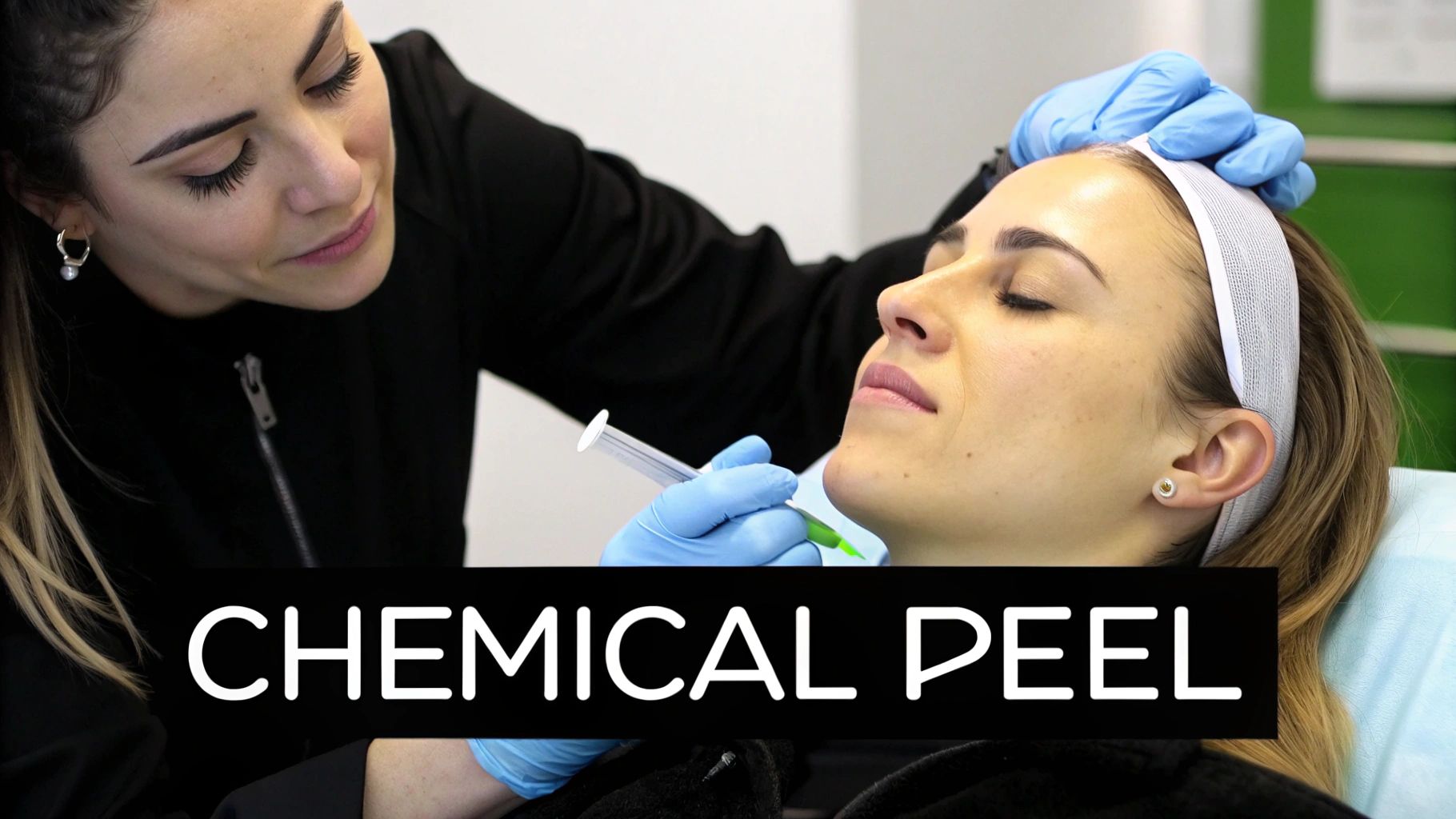
Ever look in the mirror and wish you could soften those fine lines, fade the ghosts of old sun damage, or finally get rid of stubborn acne marks? It’s a common feeling. Many of our clients are looking for a way to refresh their skin’s surface without committing to a major procedure, and this is exactly where a chemical peel can make a real difference.
At its heart, the process involves a skilled practitioner applying a carefully chosen chemical solution to your skin. These solutions typically contain gentle but effective acids—like glycolic, salicylic, or lactic acid—which work to dissolve the 'glue' holding old, dull skin cells together. This allows them to peel away naturally.
A practical insight for you: By speeding up your skin's natural exfoliation cycle, a peel essentially resurfaces your complexion. It triggers your body's own healing response, which includes creating new, healthy skin that is visibly brighter and smoother in both tone and texture. It's like giving your skin a focused workout to build its strength and resilience.
Why Are Peels So Popular?
There's a reason this treatment has become a staple in aesthetics. The European chemical peel market is part of a global industry valued at around $337.1 million, with projected annual growth of 5% to 7%. This isn't just hype; it's driven by the genuine, visible results people see in their own mirrors. You can explore the different options available in our comprehensive guide to chemical peels.
What makes peels so effective is their versatility. The treatment can be precisely tailored to tackle your specific concerns, whether it's pigmentation, texture, or signs of ageing. It's not just about taking something away; it's about revealing the healthier, more vibrant skin that's been waiting underneath.
This treatment is a fantastic option if you're hoping to:
Soften the appearance of fine lines and wrinkles.
Reduce uneven pigmentation, including sun spots and melasma.
Improve the texture of rough or sun-damaged skin.
Manage certain types of acne and minimise post-acne scarring.
In short, it’s a brilliant way to give your skin a fresh start.
Choosing The Right Chemical Peel For You
Deciding on a chemical peel isn’t a one-size-fits-all situation. It's less about picking the "strongest" option and more about finding the perfect match for your unique skin, what you want to achieve, and how much downtime your lifestyle can accommodate. Getting this right is the secret to a great result.
Think of it like exercising. Sometimes a light jog is all you need to feel refreshed, while other times, a more intense workout is necessary to make real progress. Chemical peels are much the same, working at different depths to solve different problems.
Light, Medium, and Deep Peels Explained
Your practitioner will always guide you, but walking into your consultation with a bit of knowledge is incredibly empowering. The choice really boils down to whether you're after a quick refresh or need to get to grips with more stubborn skin issues.
Light (Superficial) Peels: These are often called 'lunchtime peels' for a reason! They're the perfect entry-level treatment for a quick glow-up. Using gentle acids like glycolic or lactic acid, they work on the very top layer of your skin. This makes them ideal for brightening a dull complexion, improving texture, and tackling minor discolouration. With virtually no downtime, you can genuinely get back to your day right after.
Medium Peels: Stepping it up a notch, a medium peel goes a little deeper to address more noticeable concerns. Acids like Trichloroacetic Acid (TCA) are often used here. They are brilliant for reducing moderate sun damage, more persistent pigmentation, and fine lines. You should expect some visible peeling, so planning for a few days of social downtime while your fresh skin emerges is a smart move.
Deep Peels: This is the most intensive option and is usually a significant, one-off procedure. A deep peel is reserved for tackling deep-set wrinkles, considerable sun damage, or even certain types of scars. While it delivers the most dramatic and long-lasting results, it also requires the longest recovery period.
This image clearly shows how each peel works at different layers of the skin.
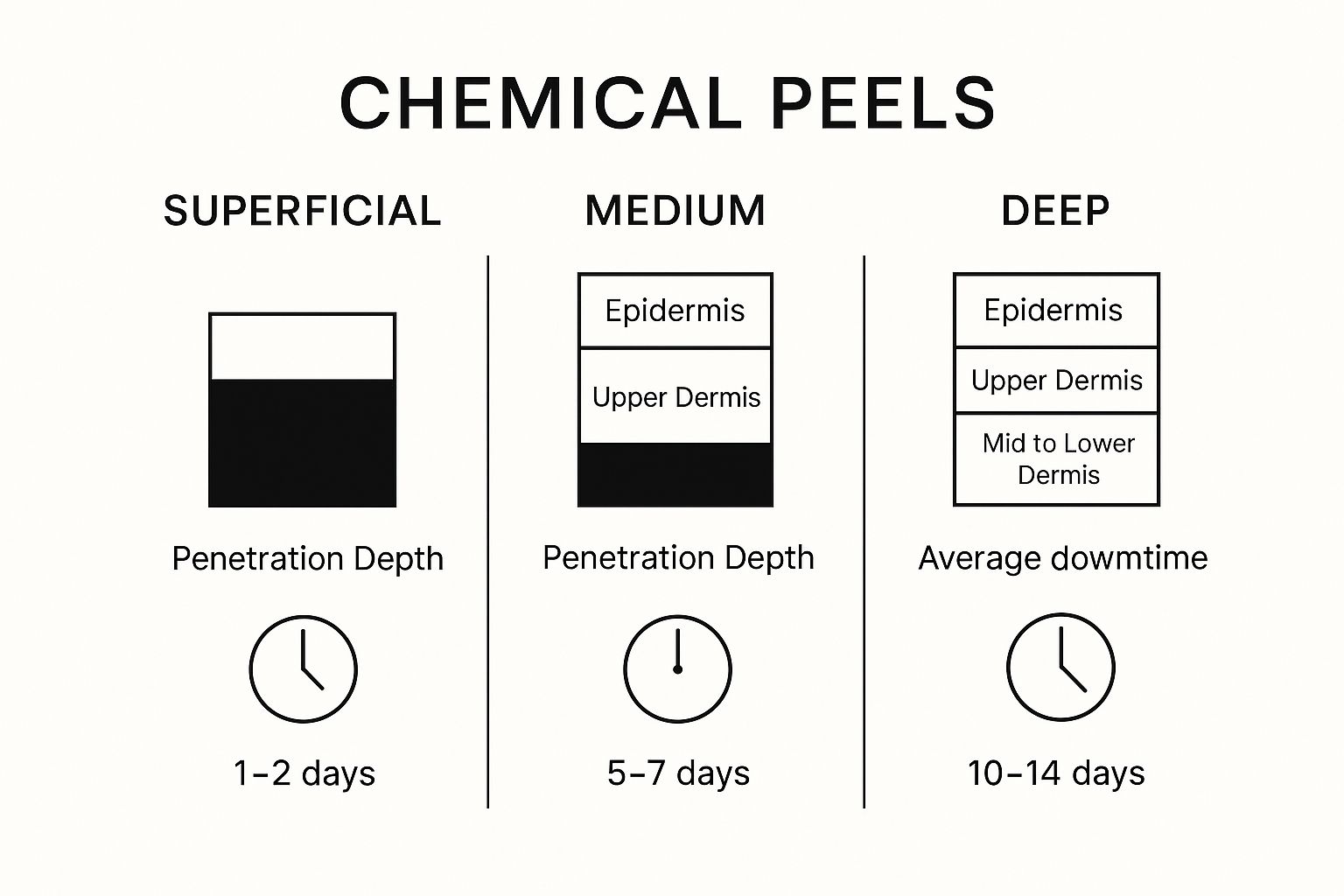
As you can see, the deeper the peel penetrates, the more profound the changes—but also the more healing time you'll need.
To make comparing them even easier, here’s a quick breakdown of what to expect from each type.
Comparing Chemical Peel Types At A Glance
Peel Type | Best For | Common Acids | Expected Downtime | Typical Results |
|---|---|---|---|---|
Light | Dullness, minor discolouration, fine lines, acne | Glycolic, Lactic, Salicylic Acid | 0-2 days | Brighter, smoother skin tone and a refreshed glow |
Medium | Sun damage, moderate pigmentation, fine-to-moderate wrinkles | Trichloroacetic Acid (TCA), Jessner's Solution | 5-7 days | Visibly reduced pigmentation, smoother texture, fewer lines |
Deep | Deep wrinkles, significant sun damage, scars, pre-cancerous growths | Phenol Acid | 2+ weeks | Dramatic improvement in skin texture, tone, and wrinkles |
Ultimately, the goal is to find that sweet spot where your desired outcome aligns perfectly with what your schedule allows.
Key Insight: The most crucial step in your journey is having an honest chat with your practitioner. Being open about your goals, lifestyle, and any concerns you have will ensure you choose the peel that’s truly right for you. We're here to listen and guide you, not just sell you a treatment.
Getting to grips with peels is a fantastic first step. If you're curious about how they stack up against other popular treatments, our guide to non-invasive cosmetic procedures offers a brilliant overview. This knowledge empowers you to have a confident, informed discussion with your aesthetician, helping you create a plan that fits you perfectly.
The Real Benefits of a Professional Peel
So, beyond the science, what can a professional chemical peel actually do for your skin? The answer is a lot more than just a deep clean. We’re talking about real, visible results that not only improve your complexion but can give your confidence a serious boost.
Imagine your foundation gliding on like a dream over a smooth, even surface. Or think about those frustrating dark spots you’ve been carefully concealing finally starting to lighten. This is what we mean by real-world results, and it's why peels are a go-to treatment for so many people seeking a fresh start for their skin.
A Smoother, Clearer Complexion
One of the first things you’ll notice is a significant change in your skin’s texture and overall clarity. By lifting away that outermost layer of dead skin and built-up grime, a chemical peel effectively clears out clogged pores.
This makes it an incredibly useful treatment for managing some forms of acne and reducing the appearance of old blemish marks. The outcome? Skin that doesn't just look clearer but feels unbelievably soft and smooth to the touch.
A practical insight for you: A professional peel does more than just resurface your skin; it’s like a personal trainer, encouraging it to act younger and healthier. It kick-starts collagen production, which is the key protein responsible for keeping skin firm and plump.
This collagen-boosting effect is the secret to a more youthful appearance. As your skin generates new collagen, you'll start to see a softening of fine lines and a more resilient, supple feel. It also helps your skin hold onto moisture better, leading to that coveted healthy glow.
It’s no wonder the demand for peels is on the rise, with market researchers forecasting a compound annual growth rate of around 7% for the treatment.
Fading Pigmentation and Boosting Radiance
If you've been fighting a losing battle against uneven skin tone, sun spots, or the tricky patches of melasma, a chemical peel can be a game-changer. The treatment works by lifting away the pigmented cells at the surface, which allows a brighter, more uniform complexion to emerge from underneath.
This process gives your skin a vibrant, healthy-looking radiance. For anyone concerned with fine lines, it's worth knowing how peels stack up against other anti-ageing treatments; you can learn about combining mild peels with other therapies for wrinkles in our guide.
Ultimately, all these benefits come together to give your skin a total refresh, leaving you looking and feeling revitalised.
What to Expect at Your Peel Appointment
Feeling a bit apprehensive about your first chemical peel? That’s perfectly understandable. Knowing exactly what happens during the appointment can really help ease any nerves, so let's walk through the process together.
It all begins with a proper consultation where you'll sit down with your practitioner to discuss your skin concerns and what you hope to achieve. This is the perfect time to ask questions—no matter how small they seem. Being open and honest here is crucial, as it helps them select the right peel for your specific needs.
During the Treatment
When you arrive for the treatment itself, the whole process is surprisingly quick and straightforward. Here’s a breakdown of what you can expect:
Skin Preparation: First things first, your skin will be deeply cleansed to get rid of any lingering makeup, dirt, or natural oils. Think of it as creating a perfectly clean canvas so the peel solution can penetrate evenly and work its magic.
Peel Application: Next, your practitioner will carefully brush the chemical solution onto your skin. You'll likely feel a bit of a tingling or warming sensation as it gets to work. This is completely normal and just means the active ingredients are starting to do their job.
Timing and Neutralisation: The solution stays on for a predetermined amount of time—this varies depending on the strength of the peel and your skin's sensitivity. Once the time is up, a neutralising agent or a cool compress is applied to halt the chemical reaction and instantly soothe your skin.
A practical insight for you: You might notice your skin looking a little flushed or pink straight after the treatment, a bit like a mild sunburn. This is a totally normal and expected part of the process as your skin kicks off its renewal cycle. We will never rush you out the door; we'll make sure you feel comfortable and understand exactly what's happening.
Before you leave, you’ll be given clear, detailed instructions on how to care for your skin over the next few days. The goal is to make sure you feel supported, understand what to do at home, and get the beautiful results you’re looking for.
Your Aftercare Plan for Amazing Results

The success of your chemical peel doesn't stop when you walk out of the clinic. In fact, what you do over the next few days and weeks is just as important as the treatment itself. Think of it as protecting your investment and guiding your skin through its final, crucial step to looking its absolute best.
Your freshly revealed skin is brand new, incredibly delicate, and extremely vulnerable to the sun. This makes sun protection the number one, non-negotiable rule. You'll need to be diligent about applying a broad-spectrum sunscreen with at least SPF 30 every single day, without fail. That means even when it’s overcast or you’re just sitting near a window.
Nurturing Your New Skin
For the first week or so, your skin needs to be babied. A simple, gentle approach is all that’s required to help it heal beautifully and avoid any hiccups.
Be Gentle: When you wash your face, use a mild, soap-free cleanser and only your fingertips. Steer clear of any scrubs, washcloths, or cleansing brushes until all the peeling has finished and your skin feels back to normal.
Hydrate, Hydrate, Hydrate: Your skin will likely feel tight and dry, so a good, neutral moisturiser is your best friend. Look for ingredients like hyaluronic acid to soothe the skin and lock in moisture. We can recommend specific products that are perfect for post-peel care. Apply it as often as needed to stay comfortable.
Hands Off: This is the tough one. As your skin starts to flake and shed, you absolutely must resist the temptation to pick, pull, or scrub at it. Let it come off on its own timeline. Forcing it can cause irritation, scarring, and blotchy pigmentation, which is the last thing you want.
Following a proper aftercare routine is vital for achieving the best outcome. The UK chemical peel market is seeing a lot of innovation to improve efficacy, but nothing replaces professional expertise and diligent client aftercare for avoiding complications. Learn more about the growth of the UK peel market.
By sticking to these simple guidelines, you’re giving your skin the best possible chance to heal perfectly. The reward? Locking in those gorgeous, confidence-boosting results you were hoping for.
Your Chemical Peel Questions Answered
It's natural to have questions before trying a new skin treatment. We get it. To help you feel completely comfortable and in the know, we’ve put together honest, straightforward answers to the questions we hear most often from our clients.
Think of this as a chat with an expert, designed to clear up any final uncertainties. We want you to feel confident that a chemical peel is the right choice for you.
Does a Chemical Peel Hurt?
This is probably the number one question we're asked, and the answer really comes down to the strength of the peel. A light, superficial peel usually feels like a mild tingling or a bit of a sting, but it subsides very quickly.
For medium peels, the sensation is a little more intense—more of a noticeable warmth. However, your practitioner will keep you comfortable, often using a cooling fan. Honestly, most of our clients find the whole thing surprisingly easy to handle.
How Often Should I Get a Chemical Peel?
The best schedule is always the one that’s tailored to your skin and what you're trying to achieve. There’s no one-size-fits-all answer.
Light Peels: These are brilliant for maintenance. We often recommend a series of them, usually every 4-6 weeks, to keep your skin looking fresh and glowing.
Medium Peels: Because these go deeper, you'll need them much less often. Think once or twice a year to really get on top of stubborn texture or pigmentation.
Deep Peels: This is a serious, one-and-done procedure. It’s a powerful treatment that isn't repeated.
Your aesthetician is your partner in this. They’ll help you map out a treatment plan that gets you the results you’re looking for.
A practical insight for you: Let’s bust a common myth. You don't need to see loads of flaky skin for the peel to be working. Success is measured by how much better your skin’s tone and texture look afterwards, not by how much you shed. Some of our clients peel a lot, some barely at all—both can get fantastic results.
When Can I Wear Makeup Again?
Patience is key here! Your fresh, new skin needs time to breathe and settle. The waiting time really depends on the peel’s intensity.
After a light peel, you can usually pop on some makeup within 1-2 days, as soon as any initial pinkness has gone down.
With a medium peel, it’s best to wait at least 5-7 days. This gives your skin time to get through the main peeling stage.
After a deep peel, you’ll need to hold off on makeup for at least 2 weeks to properly support the more intensive healing process.
When you do start wearing makeup again, go for something light and mineral-based. And always, always use clean brushes—the last thing your sensitive new skin needs is bacteria.
Ready to see what a professional peel can do for your complexion? At YOUTHFUL REVIVAL, we specialise in creating bespoke treatment plans that deliver beautiful, natural-looking results. Book a chat with our friendly experts in Maidenhead today and let's start your journey to refreshed, confident skin.
Comments