
What Causes Hyperpigmentation on Face? Find Out the Reasons

Dealing with dark spots can be a real knock to your confidence, but think of it this way: understanding the story behind them is the first step toward taking back control. It’s not just a surface-level issue; it's your skin trying to tell you something.
Hyperpigmentation is essentially your skin's defence system going into overdrive. When it senses a threat—be it the sun's powerful rays, the fallout from a breakout, or a shift in your hormones—it ramps up the production of melanin. This is the natural pigment that gives your skin, hair, and eyes their colour.
Sometimes, this protective response becomes a bit too enthusiastic in certain spots, leaving behind a tell-tale mark. Getting to the root of what's causing hyperpigmentation on your face is all about pinpointing these specific triggers. This isn't just theory; it's practical knowledge you can use every day to make smarter choices for your skin.
Why Me? Unpacking the 3 Main Causes of Uneven Skin Tone
So, what’s actually kicking your melanin production into high gear? While everyone's skin story is unique, the triggers usually fall into one of three main camps. Let's figure out which one sounds most like you.
Sun Exposure: The Number One Trigger
This is the big one. Those little sun spots or 'age spots' are a direct result of time spent in the sun. Think of your pigment-producing cells (melanocytes) as tiny umbrellas. When UV rays hit, they open up, producing more melanin to shield your skin from damage. It’s a brilliant defence mechanism, but over time, it can lead to permanent clusters of pigment. If you've spent years enjoying the outdoors without consistent SPF, this is likely a major part of your skin's story.
Inflammation: The Aftermath of a Breakout
Ever noticed a dark mark that lingers long after a pimple has healed? That's post-inflammatory hyperpigmentation, or PIH. It’s your skin's response to an injury or irritation—be it acne, a scratch, or even a reaction to a harsh skincare product. The inflammation signals your melanocytes to produce extra pigment as part of the healing process, leaving a temporary stain behind. If your main concern is the ghost of spots past, this is your culprit.
Hormonal Changes: The Melasma Map
Hormones play a huge role in our skin's behaviour. Fluctuations, often during pregnancy (the "mask of pregnancy") or from taking birth control pills, can trigger a specific type of hyperpigmentation called melasma. This typically appears as larger, blotchy patches, often symmetrically on the cheeks, forehead, and upper lip. If you see this pattern in the mirror, your hormones are likely driving the bus.
To help you get a clearer picture, here’s a quick rundown of the most common triggers and what they look like.
Quick Guide to Common Hyperpigmentation Triggers
Primary Cause | Common Name for Dark Spots | What They Look Like |
|---|---|---|
Sun Exposure | Sun Spots, Age Spots, Solar Lentigines | Small, well-defined, flat brown or black spots on sun-exposed areas. |
Inflammation | Post-Inflammatory Hyperpigmentation (PIH) | Flat spots of discolouration (pink, red, brown, or black) where acne or an injury once was. |
Hormonal Shifts | Melasma, "Mask of Pregnancy" | Larger, symmetrical, blotchy patches of brown or greyish-brown skin, typically on the face. |
Understanding these distinctions is key. The way you treat a few sun spots will be quite different from how you'd approach widespread melasma.
By figuring out the 'why' behind your spots, you can shift from feeling overwhelmed to feeling empowered. This knowledge is your new superpower, allowing you to choose products and treatments that truly target your skin's specific needs.
This guide will walk you through each of these causes in more detail, giving you the practical insights you need. We're not just listing facts; we're exploring the conversation your skin is having with the world around it. This is where you begin to write your skin’s next, most radiant chapter.
Unravelling the Sun’s Hidden Impact on Your Skin
There’s nothing quite like the feeling of the sun's warmth on your skin, but beneath that lovely glow, a complex story is unfolding. The leading culprit behind facial hyperpigmentation is ultraviolet (UV) radiation, which works quietly over time to create what we often call 'sun spots' or 'age spots'.
Imagine your skin’s pigment, melanin, as a team of tiny, dedicated guardians. When the sun’s rays hit your skin, it sounds an alarm, signalling these guardians to spring into action and produce more melanin. Their job is to form a protective shield, absorbing UV radiation to prevent deeper damage.
But sometimes, this production line gets a bit chaotic. Instead of a smooth, even shield, the melanin clumps together in certain areas. These clusters of pigment are what we see on the surface as dark patches.
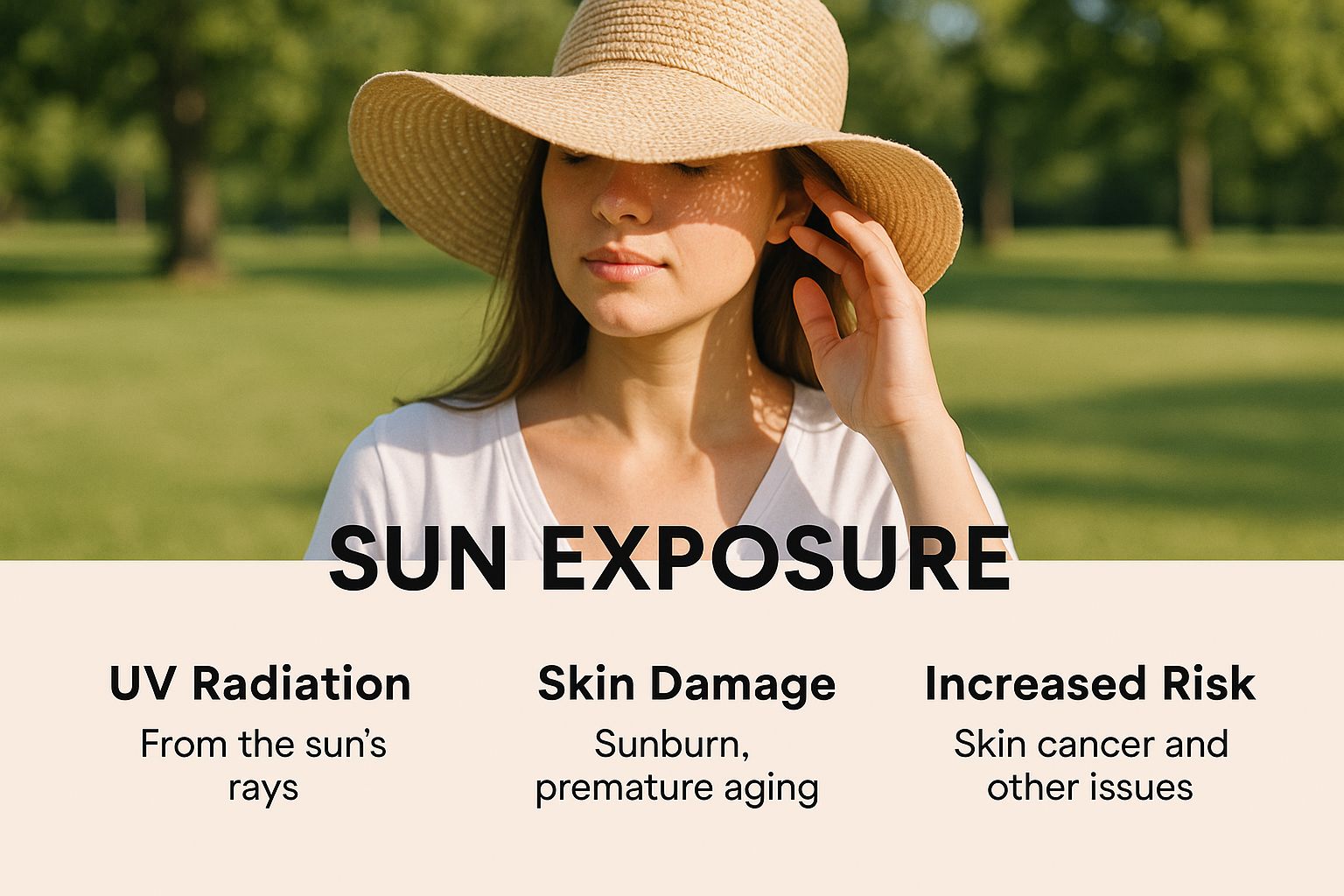
This process doesn’t happen overnight. It’s a cumulative story written on your skin over years. It’s not about that one blistering sunburn from a holiday years ago; it’s the sum of countless small moments. Every walk to the shops, every minute spent driving with the sun on your face, even the light streaming through a window on a cloudy UK day—it all adds up.
Your Daily Defence Against Dark Spots
This is where the real power lies: making sunscreen a non-negotiable part of your daily ritual. It’s not just for the beach. It’s your single most effective tool for preventing new spots from appearing and stopping the ones you already have from getting darker.
Think about it. In the UK, UV radiation is a primary trigger for hyperpigmentation disorders, especially as we get older and the effects of a lifetime of sun exposure really start to show. Yet, so many of us are still inconsistent with sun protection. Studies show only a small minority of people apply a broad-spectrum SPF 30+ every single day. This is the simplest, most practical change you can make today.
Making sun protection an unbreakable habit is the single most inspiring step you can take towards a clear, even-toned complexion. If you're already seeing the effects of past exposure, our guide to skin treatment for sun damage is a fantastic place to start exploring your options for repair.
Think of applying sunscreen not as a chore, but as an investment in your skin's future. Each morning, you’re making a promise to yourself—a commitment to protect your skin's health and preserve its natural radiance, one day at a time.
Ultimately, understanding the sun's role is incredibly empowering. You can’t turn back time, but you can absolutely change the story your skin tells from this day forward.
How Skin Inflammation Can Leave Its Mark
Have you ever looked in the mirror and noticed a dark spot that stubbornly hangs around, long after a pimple has gone? That lingering shadow is one of the most common forms of hyperpigmentation, and it has a name: post-inflammatory hyperpigmentation (PIH).
Think of it like this: when your skin is injured – whether from a breakout, a scratch, or even a reaction to a harsh product – it sends out an emergency repair crew. Their main job is to heal the damage, but in the chaos, the signals can get a bit muddled.
The inflammation essentially shouts at your pigment-producing cells (the melanocytes) to go into overdrive. They get a little too enthusiastic and end up depositing a surplus of melanin in that one spot. This excess pigment is the ‘mark’ you see, a small echo of the battle your skin just fought.

This particular response is a frequent answer to the question of what causes hyperpigmentation on face, especially here in the UK. In fact, research shows that PIH is incredibly common, affecting almost 4 in 10 people who experience inflammatory skin conditions like acne or eczema. It's particularly prevalent for those with skin of colour, as their melanocytes are naturally more active and prone to reacting this way. You can explore more about these findings on posthumanism.co.uk and see just how widespread this issue really is.
Your Gentle Approach to a Calmer Complexion
Knowing the cause of PIH is a game-changer. It shifts your focus from trying to scrub away the dark spot to gently managing the initial inflammation that caused it. The goal is to soothe your skin, not to wage war on it. So, when you feel a blemish brewing or have a flare-up, step away from the harsh scrubs and magnifying mirrors.
Here’s how you can be kinder to your skin when it needs it most:
Don't Pick or Squeeze: This is the golden rule. Squeezing a spot creates a bigger, angrier wound, which all but guarantees a darker, more stubborn mark will take its place. Put a pimple patch on it and forget about it.
Reach for Calming Ingredients: Look for skincare heroes like niacinamide, azelaic acid, or cica. These are brilliant for their anti-inflammatory abilities, helping to dial down redness and irritation before they trigger a major pigment party.
Shield it From the Sun: An inflamed area of skin is extremely vulnerable to UV rays. Sun exposure will only make the resulting dark mark deeper in colour and much longer-lasting. A dab of SPF on a healing spot is absolutely non-negotiable.
Realising that these marks are just a side effect of your skin's powerful healing ability can change your perspective entirely. Instead of feeling frustrated, you can see it as an opportunity to support your skin with gentle, nurturing care, helping to prevent the marks from even forming.
When you adopt this supportive mindset, you’re doing more than just treating a symptom. You’re building a healthier, more trusting relationship with your skin, working with its natural processes to guide it back to a calm, even-toned, and radiant state.
Navigating Hormonal Shifts and Your Skin
Our bodies are governed by a delicate dance of hormones, powerful chemical messengers that dictate everything from our mood to our energy levels. And, as many of us know all too well, they have a huge say in the health and appearance of our skin. When these hormonal tides shift, they can sometimes trigger a very specific type of hyperpigmentation called melasma.
This is a journey many women embark on, often during pregnancy—giving rise to the well-known "mask of pregnancy"—or when using hormonal contraceptives. It can feel like your skin has a mind of its own, but understanding the ‘why’ behind these changes is the first real step towards reclaiming your confidence.
Imagine hormones like oestrogen turning up the volume on your skin’s pigment-producing cells (the melanocytes). With the volume cranked up, these cells become hyper-sensitive and reactive to sunlight. Even a small amount of UV exposure can send them into overdrive, causing them to churn out excess melanin. This overproduction is what appears on the skin as symmetrical, blotchy patches.

The Telltale Signs of Melasma
Unlike the scattered, defined spots you might get from sun damage or the single mark left behind by a blemish, melasma has a signature pattern. It tends to show up in very specific places, which is one of the biggest clues to its hormonal roots. Take a look in the mirror; do you see this?
The Cheeks: You'll often see symmetrical patches spread across both cheekbones.
The Forehead: A larger, more concentrated patch can appear right in the centre.
The Upper Lip: This is a very common area, sometimes looking like a faint shadow or moustache.
The Bridge of the Nose: Another classic spot for this type of pigmentation to surface.
This profound link between our hormones and skin is no secret. Here in the UK, it’s a leading reason for facial discolouration. In fact, research shows that up to 10-15% of women may be affected by melasma during pregnancy or while taking hormonal birth control. The emotional toll can be heavy, but it’s so important to remember you are far from alone. For a deeper look at the science, you can learn more about the research behind melasma causes.
When melasma appears, it can feel disheartening, as if your own skin is betraying you. Try to see it as a conversation. Your body is sending you a message, asking you to listen closely and respond with gentle, dedicated care.
Your Most Powerful Ally in Managing Melasma
While the hormonal trigger may be coming from within, your most effective defence is entirely external: relentless, uncompromising sun protection. Because your skin is already in a heightened state of sensitivity, UV radiation is the number one thing that will activate and darken those melasma patches.
This makes a broad-spectrum sunscreen your non-negotiable, must-have skincare product. Every single day. Rain or shine. No exceptions. It’s not about hiding from the sun, but about creating a steadfast, reliable shield for your vulnerable skin. This one practical step does more than any expensive serum to keep melasma in check.
This one simple, powerful habit is the absolute cornerstone of managing melasma. It prevents existing patches from getting darker and helps stop new ones from ever forming. Think of it as a daily act of empowerment, putting the health and future of your skin firmly back in your own hands.
The Other Pieces of the Pigmentation Puzzle
While the sun, inflammation, and hormones are definitely the main characters in the story of uneven skin tone, they aren't the only ones. Your skin's journey is complex, and sometimes, more subtle factors are at play, quietly contributing to dark spots and leaving you scratching your head. To truly understand what's happening, you have to become a bit of a detective for your own skin.
For example, have you ever considered your medication? Some prescriptions can make your skin extra sensitive to sunlight, a side effect called photosensitivity. This means even a little bit of sun can provoke a surprisingly strong pigment reaction, causing new patches of hyperpigmentation to pop up seemingly out of nowhere. If you've started a new medication and noticed changes, it's worth investigating.
Digging Deeper into Everyday Triggers
Beyond your medicine cabinet, your daily habits and even your family tree can hold important clues. The empowering part is realising that small, conscious changes in these areas can make a world of difference, helping you work towards that radiant, even-toned complexion you’re after.
Let's look at some of these less-obvious culprits:
Your Skincare Shelf: Are your products packed with harsh fragrances, drying alcohols, or overly aggressive exfoliants? These can create a state of low-grade, constant inflammation. Over time, this simmering irritation can send your pigment cells into overdrive, almost like they're trying to heal a wound that isn't there. Your takeaway: if it stings or makes you red, it's probably not helping.
Your Genetic Blueprint: Sometimes, the tendency to develop dark spots is simply in your DNA. If your parents or siblings deal with things like freckles or melasma, it’s more likely you will too. This doesn't mean you're defeated, it just means you need to be extra vigilant with your sun protection.
Underlying Health: Certain medical conditions can show up on your skin first. It’s a powerful reminder of just how connected your skin’s health is to your overall wellbeing.
Think of this not as a blame game, but as a fact-finding mission. Every clue you uncover gives you more power to make smart, supportive choices for your skin's future.
Building Your Skin’s Defences
Once you know what you’re up against, you can start taking action. A great first step is to scrutinise the labels on your skincare. If a product leaves you feeling red, tight, or stingy, it might be part of the problem. Your routine should be about calming and strengthening your skin, not causing more stress.
This is where a protective antioxidant serum can be a game-changer. Introducing something like a high-quality vitamin C serum helps shield your skin from the daily environmental attacks that can lead to pigmentation.
And if you think a medication might be the trigger, it’s always worth a chat with your GP. By putting together all the unique pieces of your health story, you can stop feeling frustrated by your skin and start working with it. That’s the real secret to achieving lasting clarity.
Your Action Plan for Brighter Skin
Getting to the bottom of what causes those dark spots on your face is the first real victory. Now that you have that knowledge in your corner, you can finally start the journey towards a clearer, more even-toned complexion. This isn't about finding a magic wand; it's about building a lasting, supportive relationship with your skin.
Your game plan comes down to the three core ideas we've walked through together. First, making daily sun protection an absolute, unshakeable habit. Second, embracing a gentle, calming skincare philosophy to keep inflammation at bay. And finally, understanding that hormonal shifts call for consistent care and a healthy dose of patience.
Consistency Is Your Greatest Ally
Let's be clear: managing pigmentation is a marathon, not a sprint. The most powerful tool you have isn’t some miracle cream, but the simple, unwavering consistency of your daily routine. Real progress is made in small, steady steps, day in and day out.
Be kind to yourself through this process. Every single day you apply your sunscreen, every time you choose a soothing product over a harsh one—that’s a win. You are actively writing a new, more radiant chapter for your skin.
Building Your Brighter Future
The goal here is to feel hopeful and empowered. Your journey truly begins with a positive mindset and a few simple, foundational steps. A brilliant place to start is by supporting your skin's health from the inside out with a nutritious diet; you can explore healthy meal ideas to beautifully complement your skincare efforts.
As you begin to build momentum, you'll naturally start wondering about specific treatments and ingredients that can really speed things along. For a deep dive into all your options, our complete guide to effective treatment for pigmentation on the face is the perfect next step. You’ve got this. You’re now equipped to move forward with real confidence.
Your Hyperpigmentation Questions, Answered
Starting a journey towards clearer skin always brings up a few questions. It’s completely natural. So, let's walk through some of the most common ones together, giving you the clear, practical insights you need to move forward with confidence.
Can My Diet Really Cause Dark Spots on My Face?
While a slice of cake won’t give you a dark spot overnight, your diet absolutely plays a crucial role in your skin's overall health and resilience. Think of it this way: a diet lacking in antioxidants is like leaving your skin’s defences down. It becomes more vulnerable to attackers like UV rays and pollution, which are well-known triggers for hyperpigmentation.
On the flip side, a plate full of colourful fruits and vegetables is like sending in reinforcements. Foods packed with vitamins C and E act as your skin's internal repair crew, working from the inside out to protect and mend. For almost everyone, a balanced diet is a powerful partner in the quest for an even, glowing skin tone.
Your plate is a vital part of your skincare routine. Every healthy meal is a chance to strengthen your skin's natural ability to fight off the very things that cause uneven tone.
Will Hyperpigmentation Just Fade on Its Own?
This is the big question, and the honest answer is: it really depends on how deep the pigment is. That faint mark left behind by a healed spot (what we call post-inflammatory hyperpigmentation) often does fade over several months, sometimes up to a year. This is especially true if you're incredibly diligent with your sun protection.
However, deeper pigmentation—like those stubborn sun spots or the tricky patterns of melasma—has a much stronger hold. These marks have settled far deeper into the skin’s layers and are very unlikely to vanish without some form of targeted treatment. The one non-negotiable in every single case? Consistent sun protection. It is the single most important thing you can do to help any mark fade and stop it from getting darker.
Does Stress Make My Dark Spots Worse?
Stress won't create a dark spot from nothing, but it can absolutely add fuel to the fire. When you’re feeling overwhelmed, your body produces more of the stress hormone, cortisol. This hormone is a major driver of inflammation everywhere in your body, and your skin is no exception.
This spike in inflammation can make conditions like acne or eczema flare up, leading to angrier breakouts that take longer to heal. And what does that lead to? A much higher chance of developing those lingering dark marks known as post-inflammatory hyperpigmentation. Learning to manage your stress—whether through mindfulness, a good workout, or just a few moments of quiet—is a surprisingly practical and inspiring step towards a clearer, calmer complexion.
At YOUTHFUL REVIVAL, we believe knowledge is power, and we're here to provide the expert care you need to reach your skin goals. Discover our personalised skin rejuvenation treatments and begin your journey to a more radiant you by visiting us at https://www.youthfulrevival.com.

Comments