
How to treat dehydrated skin: Simple steps for lasting moisture

Before you can start treating dehydrated skin, you need to be absolutely certain that what you're dealing with is a lack of water, not a lack of oil. It’s the single most important step. So many of us mistake dehydration for dryness, reach for the wrong products, and end up even more frustrated when our skin feels just as tight as before.
The reality is, even the oiliest of skin can be desperately thirsty. This can lead to that tell-tale tightness, a dull-looking complexion, and fine lines that seem to appear out of nowhere. Sound familiar? Let’s get to the bottom of it.
Is Your Skin Thirsty or Just Dry?
We’ve all been there. That tight, almost papery feeling after you wash your face, even after you’ve layered on a thick, creamy moisturiser. It's a classic sign your skin is sending out an SOS, but what is it actually asking for? The answer almost always comes down to understanding the crucial difference between two skin concerns that sound similar but are worlds apart.
Dehydrated skin is a condition, not a permanent skin type. Think of it as a temporary state of thirst. It’s a sign that your skin is losing more water than it’s taking in. This can happen to absolutely anyone, no matter if your skin is naturally oily, combination, or prone to dryness. Things like central heating in winter, a change in diet, or using skincare products that are too harsh can all strip precious water from your skin, leaving it feeling parched.
On the other hand, dry skin is a skin type you’re born with. It means your skin’s sebaceous glands don't produce as much sebum (natural oils) as other skin types. Those oils are vital; they form a protective barrier that seals moisture in. Without enough of it, your skin will always struggle to hold onto hydration, often feeling rough or flaky to the touch, no matter how much water you drink.
Dehydrated Skin vs Dry Skin at a Glance
To make it even clearer, I've put together a quick comparison table. Think of this as your go-to guide next time your skin is acting up and you're not sure why.
Characteristic | Dehydrated Skin (Lacks Water) | Dry Skin (Lacks Oil) |
|---|---|---|
Feeling | Feels tight and constricted, but can still be oily or have breakouts. | Feels rough, scaly, or flaky. Rarely feels oily. |
Appearance | Looks dull, flat, and tired. Fine lines and wrinkles are more obvious. | May look red or irritated. Small, tight pores are common. |
Cause | A temporary condition caused by external factors (diet, weather, skincare). | A genetic skin type. You consistently produce less natural oil. |
Can it change? | Yes! It can be resolved with the right hydration and lifestyle changes. | No, but it can be managed effectively with the right oil-based products. |
Seeing the differences laid out like this really helps clarify things. One is a temporary state of thirst that you can fix, and the other is your skin's natural disposition that you learn to manage.
The Tell-Tale Signs of Dehydration
So, how do you know for sure what your skin is trying to tell you? Once you know what to look for, the clues for dehydration are surprisingly easy to spot in the mirror.
A Dull, Lacklustre Complexion: When your skin cells are plump with water, they reflect light beautifully, giving you that healthy glow. Without that water, your complexion can look tired and flat, like it's lost its spark.
More Noticeable Fine Lines: Dehydration is a nightmare for exaggerating the appearance of fine surface lines, especially around the eyes and on the forehead. Think of it like a grape turning into a raisin—the structure is the same, but the lack of water makes all the wrinkles visible.
That Unmistakable Tightness: Your skin feels constricted, especially right after cleansing, even if you can see an oily sheen on the surface. This is a huge clue.
Increased Sensitivity: A lack of water compromises your skin's natural protective barrier. This makes it more vulnerable and reactive to everything from new products to a cold wind, leaving it feeling a bit fragile.
This simple chart is a great starting point for figuring out your skin's immediate needs.
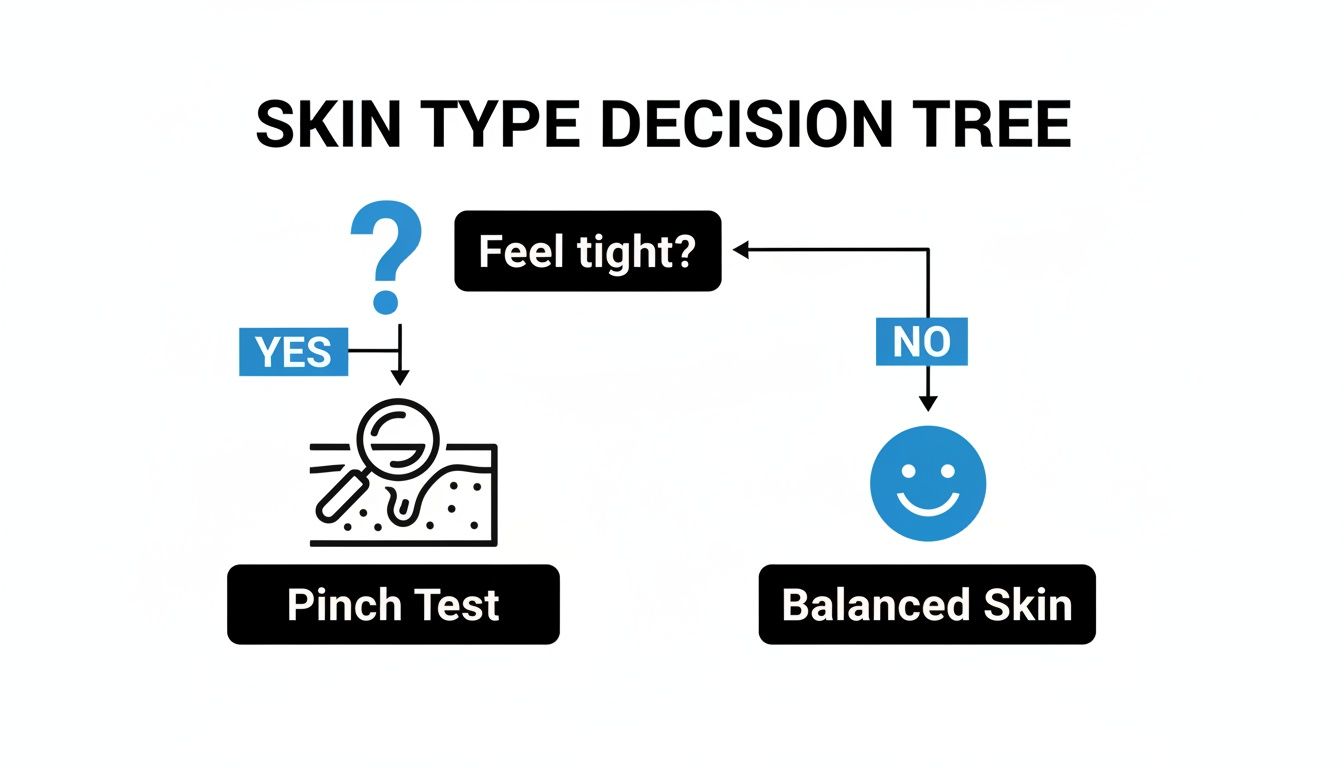
If you're nodding along to that feeling of tightness, it's time to investigate a little further with a quick at-home test.
Your At-Home Diagnostic: The Pinch Test
For a really quick, practical insight into your skin's hydration levels, you have to try the 'pinch test'. It’s a simple technique we use in the clinic all the time to get a feel for skin elasticity, or 'turgor' as it's professionally known. You can do it right now.
Gently pinch a small bit of skin on your cheek or even the back of your hand, and hold it for just a couple of seconds.
Now, let go and watch closely. Does it snap back into place instantly? If so, congratulations – your skin is likely well-hydrated. If it takes a moment to settle back to normal, or you can see a little 'tent' shape for a second, that's a classic sign of dehydration.
This simple test can be a real 'aha!' moment. It takes you out of the realm of guesswork and gives you a clear, tangible answer. Now you can confidently choose products and treatments that target the real problem—a lack of water—and finally start the journey back to a plump, radiant, and comfortable complexion.
Your Immediate Skin Rescue Plan
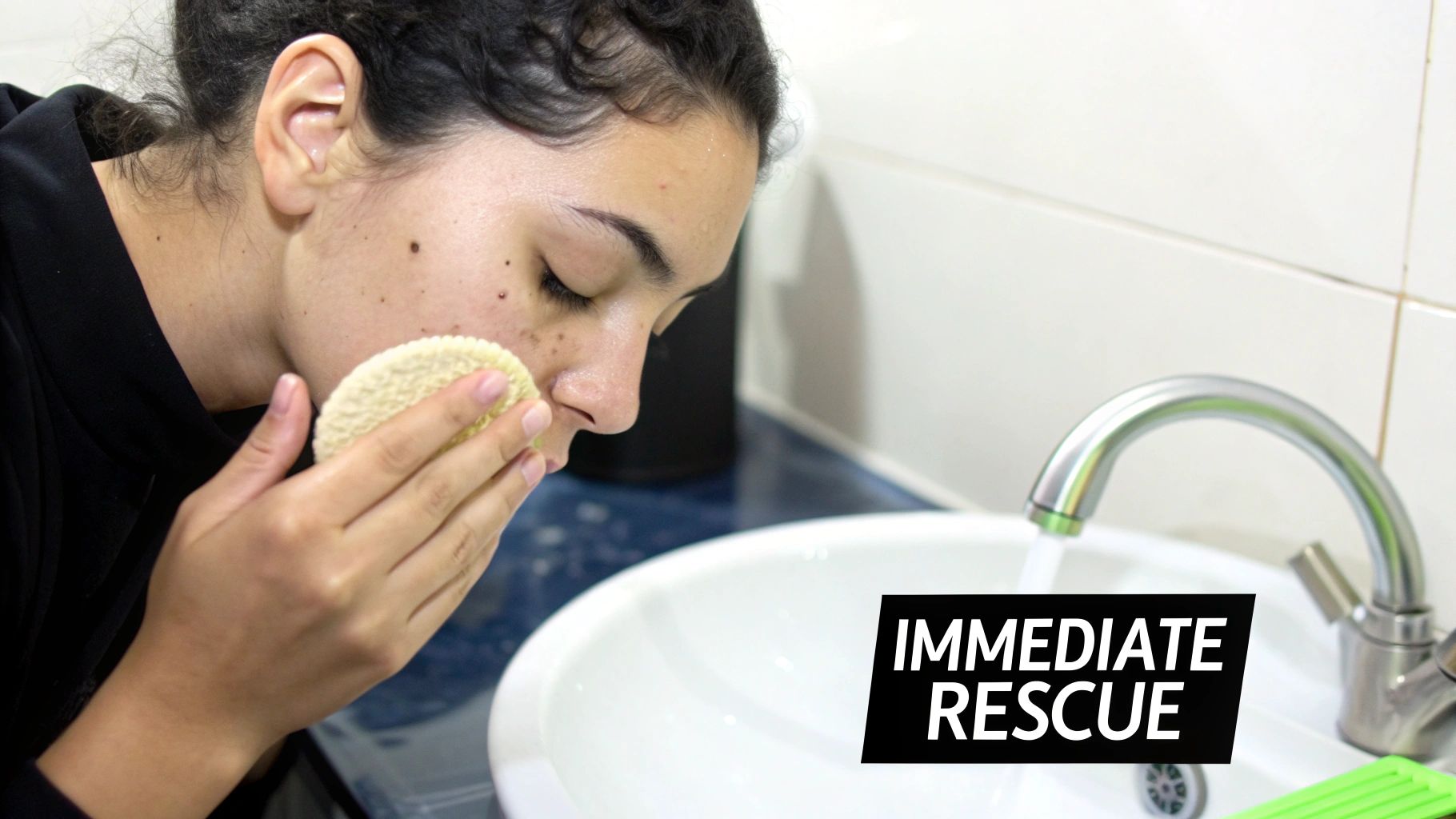
When your skin is screaming out for moisture—feeling tight, looking dull, and just plain uncomfortable—you need more than a far-off strategy. You need relief, and you need it now. Think of this as your first-aid kit for thirsty skin. These are simple, high-impact actions you can take today to soothe, calm, and flood your skin with a visible surge of hydration.
Forget about overhauling your entire routine right this second. The journey back to a plump, glowing complexion starts with what you do next. These rescue steps are all about delivering immediate comfort and starting the crucial process of rehydrating your skin from the outside in.
Tweak Your Cleansing Temperature
One of the quickest and most effective changes you can make is simply turning down the temperature of your water. A steaming hot shower might feel incredible, but for your face, it’s a disaster. Hot water strips away your skin’s natural oils, which are essential for keeping moisture locked in. This weakens your protective barrier and lets precious water evaporate right out.
From your very next face wash, commit to using only lukewarm water. This simple switch cleanses just as effectively but without causing further moisture loss. You'll notice your skin feels far more comfortable and less tight right after washing. It’s a tiny habit that makes a world of difference.
Master The Three-Minute Moisturiser Rule
Right after you’ve cleansed, the clock starts ticking. Your skin is at its most receptive to hydration when it's still slightly damp, and this is where the ‘three-minute rule’ becomes your secret weapon for making your products work harder.
The idea is incredibly simple: get your serums and moisturiser on within three minutes of gently patting your face dry. That little bit of residual dampness acts like a magnet, pulling all those lovely hydrating ingredients deeper into your skin. Applying products to damp skin can massively boost their effectiveness, trapping water before it has a chance to vanish into thin air.
Think of your skin like a sponge. A bone-dry sponge struggles to absorb anything, but a slightly damp one soaks up liquid instantly. Your skin works in exactly the same way. By applying your products while it’s still damp, you’re helping it drink up every last drop of goodness.
Embrace The Power Of A Hydrating Mist
A good hydrating mist is so much more than a fancy water spray. It's your secret weapon for topping up your skin's moisture levels throughout the day. Central heating, air conditioning, and hours in front of a screen are all silently sucking the life out of your skin.
Keep a facial mist packed with humectants like glycerin or hyaluronic acid on your desk or in your bag. A quick spritz every few hours is an effortless way to give your skin a drink, instantly replenishing lost water. It can even revive your makeup, bringing back a fresh, dewy glow when you hit that 3 pm slump.
Soothe With A Calming Compress Or Bath
If your skin isn’t just dehydrated but also feeling irritated and sensitive, a gentle compress can bring immediate, blessed relief.
DIY Soothing Compress: The next time you make a cup of tea, make two. Brew a cup of chamomile or green tea, let it cool right down, and then soak a soft face cloth in it. Wring it out so it’s not dripping and lay it over your face for 10-15 minutes. The natural anti-inflammatory properties will help calm redness and irritation beautifully.
The Oatmeal Bath: For skin that feels tight and itchy all over, an oatmeal bath is a classic remedy for a reason. Colloidal oatmeal contains compounds that bind to your skin, creating a protective barrier that prevents water loss and eases that awful itchy feeling.
These immediate actions are your first step in restoring your skin’s delicate balance. They provide the instant comfort your skin is craving and lay the groundwork for deeper, lasting healing. Since chronic dehydration often means a compromised skin barrier, learning how to repair your damaged skin barrier is a crucial next step toward achieving truly resilient and radiant skin.
Building Your Ultimate Hydration Routine
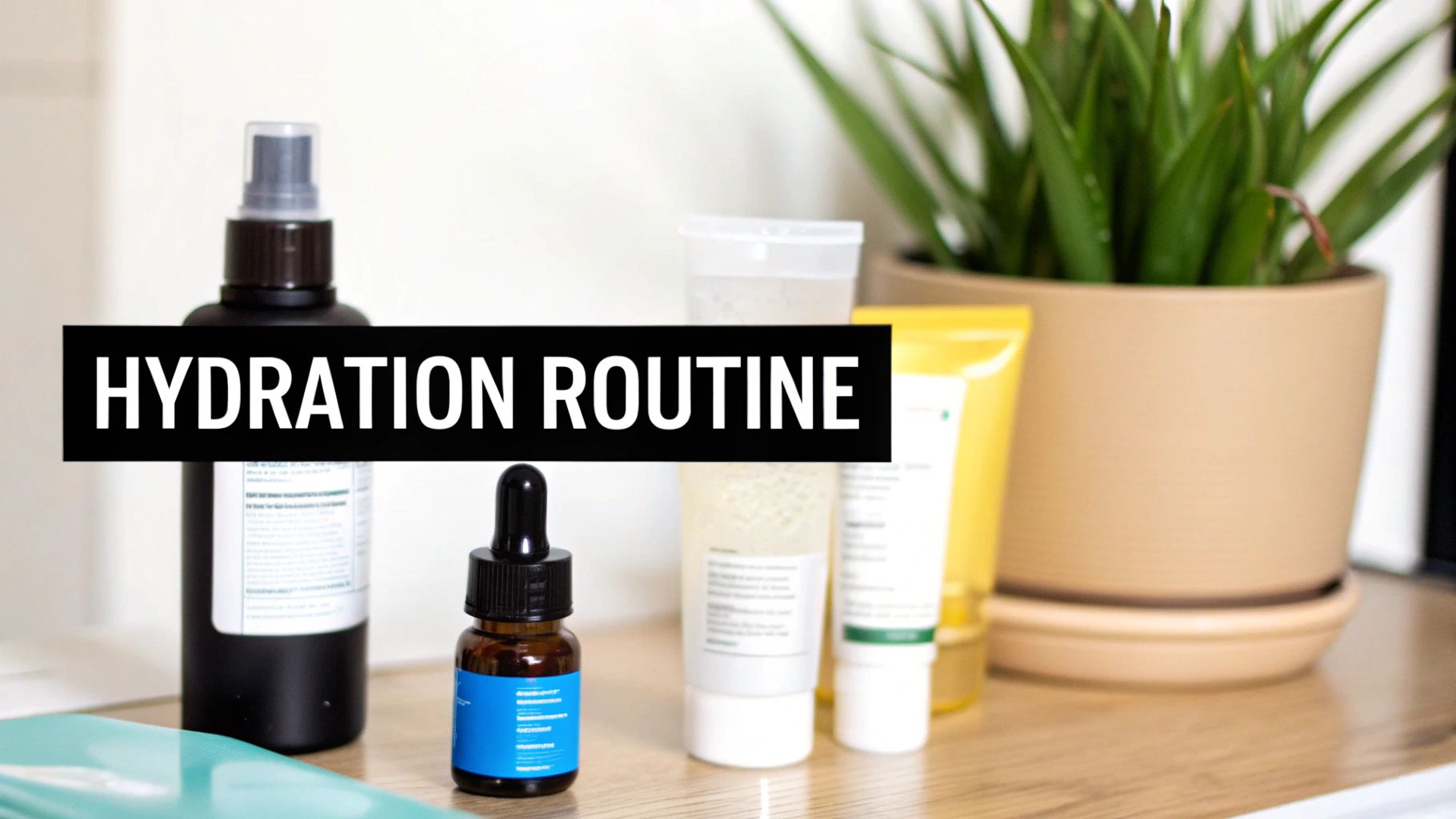
Let's get one thing straight: consistency is your secret weapon for quenching thirsty skin. While a quick-fix mask can offer some immediate relief, the real, lasting transformation comes from a daily ritual you can stick to. This isn't about adding a dozen complicated steps; it's about building a smart, purposeful routine that respects your skin's natural rhythm.
Think of it as a partnership. In the morning, you’re arming your skin to face the day’s environmental challenges. At night, you’re creating the perfect cocoon for it to heal, replenish, and rebuild its precious moisture reserves. This daily rhythm is the very foundation for taking your skin from tight and dull to plump, comfortable, and glowing.
Your Morning Ritual For Protection And Plumpness
Your morning mission is simple: get water into your skin and then lock it in place. We're creating a protective shield that will see you through the day. Each step here builds on the last, leading to a complexion that feels supple and looks bouncy.
First up, start with a gentle, pH-balanced cleanser. This is absolutely non-negotiable for dehydrated skin. Those harsh, stripping cleansers that make your skin feel ‘squeaky clean’ are actually your enemy, wrecking your delicate moisture barrier before your day has even begun. Reach for a creamy or milky formula that cleanses without stripping away what your skin desperately needs.
Next, while your skin is still a little damp, it’s time for your hydration hero: a hyaluronic acid serum. Applying it to damp skin is a total game-changer. The serum acts like a tiny sponge, pulling that surface moisture deep into your skin's layers for a serious plumping effect. Pat it in gently—don’t rub—and you can almost feel your skin taking a long, satisfying drink.
A Practical Tip: Keep your hyaluronic acid serum right next to the sink. This simple habit ensures you never forget to apply it within that crucial 60-second window after cleansing, locking in every last drop of precious moisture before it evaporates.
After your serum, you need a moisturiser that does more than just hydrate. Find one that’s packed with ceramides—the fatty acids that act like the ‘mortar’ holding your skin cell ‘bricks’ together. A strong, healthy barrier is what keeps all that lovely hydration from escaping throughout the day.
Finally, the most critical step of all is a broad-spectrum SPF 30 or higher. Sun exposure is a major culprit behind dehydration. It sucks the water out of your skin and damages its barrier function over time. Making sunscreen a non-negotiable final step protects all your hard work and is the best insurance policy against future dehydration.
Your Evening Ritual For Repair And Replenishment
When the day winds down, your skincare focus shifts from protection to deep, intensive repair. Night-time is when your skin’s natural regenerative processes kick into high gear, so it’s the perfect time to give it the nourishment it needs to heal and rehydrate while you sleep.
Begin with a double cleanse, especially if you wear makeup or SPF. This two-step method is so much gentler and more effective than scrubbing your face with a single, harsh cleanser.
First Cleanse (Oil-Based): Start with a cleansing oil or balm. Massage it onto dry skin to gently melt away makeup, sunscreen, and daily grime without any stripping. Add a splash of water to emulsify, then rinse.
Second Cleanse (Water-Based): Now, follow up with the same gentle, creamy cleanser from your morning routine. This makes sure your skin is perfectly clean and prepped to soak up all the goodness to come.
With your skin clean and still slightly damp, you can layer on your treatment serums. Hyaluronic acid is still a brilliant choice here, but you could also bring in serums with niacinamide to support barrier function or panthenol (Vitamin B5) for its wonderfully soothing and hydrating properties.
The final, most indulgent step is your evening moisturiser. This should be richer and more nourishing than your daytime cream. Its job is to create a protective, or occlusive, seal over your skin. This seal is crucial because it prevents transepidermal water loss (TEWL)—the technical term for water evaporating from your skin—while you sleep. We have a detailed guide on finding the best moisturiser for dehydrated skin that can help you pick the perfect product for this vital step.
For an extra boost a few nights a week, try swapping your night cream for a sleeping mask. These are power-packed treatments designed to deliver a high concentration of hydrating ingredients over several hours. Waking up to visibly plumper, dewier skin is the ultimate reward. It’s such an effortless way to supercharge your routine.
The Powerhouse Ingredients That Quench Skin
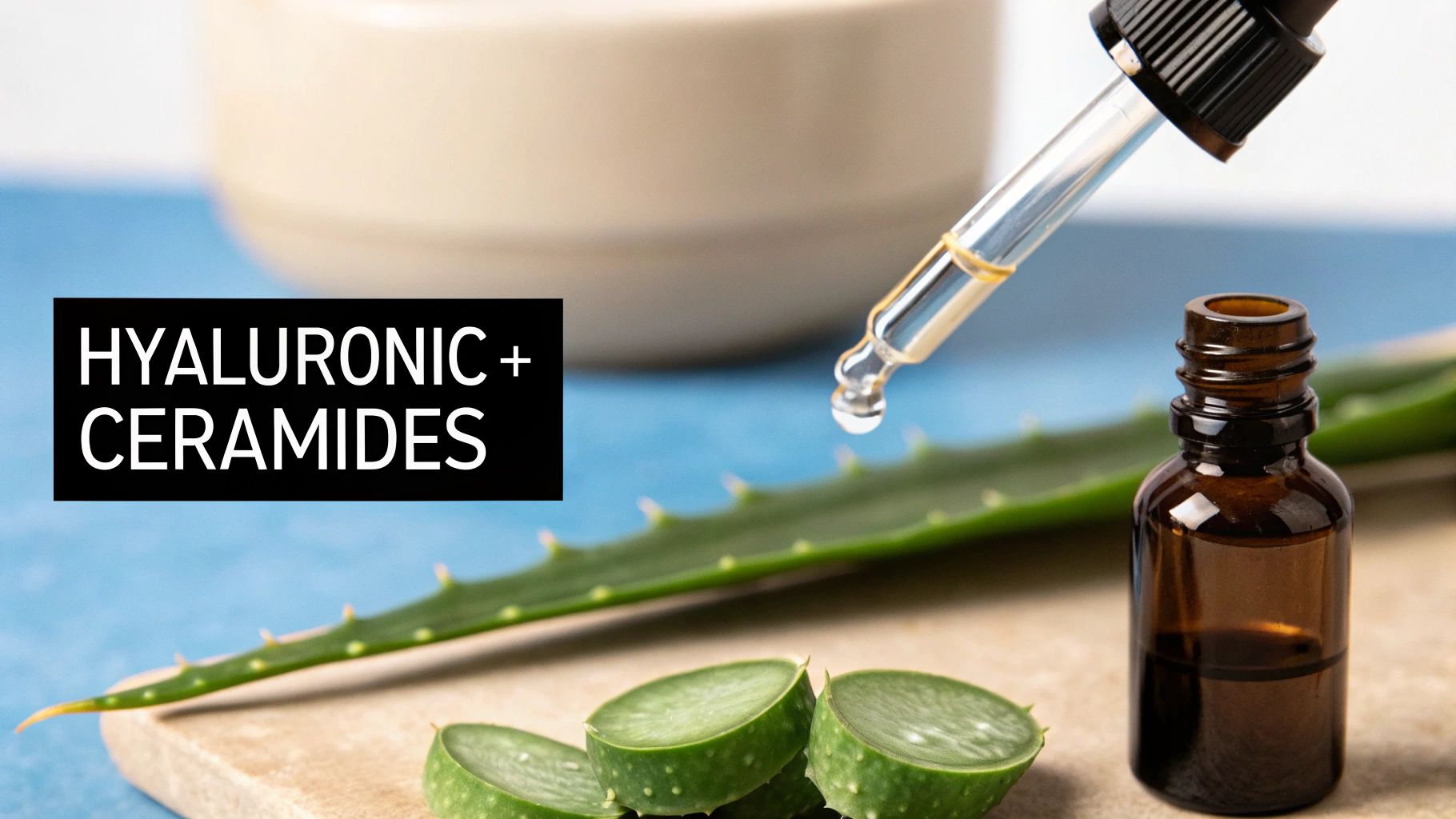
Walking down the skincare aisle can feel a bit like trying to learn a new language. But when it comes to tackling dehydrated skin, you don’t need a dictionary—just a few key heroes on your side.
Learning to read an ingredients list will make you an incredibly savvy shopper. You'll be able to confidently pick out products that will genuinely flood your skin with the water it’s crying out for, moving beyond marketing claims to find proven players that deliver real, quenching hydration. This is your cheat sheet to building a truly effective arsenal against that tight, lacklustre feeling.
The Water-Drawing Humectants
First up, let’s talk about humectants. Think of these as tiny magnets for moisture. They have an amazing ability to attract water molecules from the air and from the deeper layers of your skin, pulling that hydration right up to the surface. The result? Visibly plumper, dewier-looking skin. You’ll usually find them in serums, mists, and lightweight moisturisers.
The undisputed champion here is hyaluronic acid (HA). This molecule is a true hydration superstar, able to hold up to 1,000 times its own weight in water. When you apply it to damp skin, it acts just like a sponge, soaking up all that moisture and binding it to your skin cells. If you'd like to explore this ingredient in more detail, our guide explains exactly what hyaluronic acid is used for and how it can completely change your routine.
Beyond the star player, keep an eye out for these other brilliant humectants on the label:
Glycerin: A reliable and effective classic that’s been a skincare staple for decades. It’s fantastic for drawing in moisture while also helping to support your skin barrier.
Sodium PCA: This is actually part of your skin's own natural moisturising factors (NMF), so your skin knows exactly what to do with it. It’s excellent at binding water to cells.
Panthenol (Pro-Vitamin B5): I love this one because it's a dual-action hero. It not only hydrates but also has wonderful soothing and repairing properties, making it perfect when your skin is feeling a bit fragile.
The Barrier-Building Emollients
While humectants bring water to your skin, emollients and occlusives are the security guards that keep it there. Without them, all that lovely hydration would simply evaporate away into the air—a process known as transepidermal water loss (TEWL). These ingredients create a protective seal on the skin's surface to stop that from happening.
One of the most vital ingredients in this category is ceramides. Imagine your skin cells are bricks in a wall; ceramides are the mortar that holds them all together, creating a strong, resilient barrier. When skin is dehydrated, that wall has cracks in it, allowing water to escape. By replenishing your skin’s ceramide levels with your moisturiser, you’re essentially patching up those cracks, strengthening your barrier and locking moisture in for the long haul.
Look for moisturisers that specifically list ceramides on their ingredients list. They are absolutely fundamental for repairing the damage that leads to chronic dehydration.
A healthy skin barrier is your first and best line of defence. By using ingredients like ceramides, you're not just temporarily moisturising your skin; you're actively rebuilding its natural ability to stay hydrated on its own. It's a long-term investment in your skin's health.
Ingredients To Approach With Caution
Just as important as knowing what to put on your skin is knowing what to avoid. Some ingredients are incredibly counterproductive when you're trying to fix dehydration, as they can actively strip away moisture and weaken your delicate barrier.
It’s time to become a label detective and watch out for these common culprits:
Drying Alcohols: I’m talking about SD alcohol, denatured alcohol, or isopropyl alcohol. You often find them in toners and some acne treatments. They give a quick-drying, 'clean' feeling but are notorious for stripping your skin's natural oils, leading to irritation and even more dehydration.
Harsh Sulphates: Ingredients like Sodium Lauryl Sulphate (SLS) are what create a rich, bubbly lather in many cleansers. The problem is, they’re far too stripping for a compromised barrier. They wash away not just dirt, but also the essential lipids your skin needs to hold onto water.
Over-Exfoliating Acids: While chemical exfoliants like glycolic acid (an AHA) or salicylic acid (a BHA) can be brilliant, overdoing it is a fast track to a damaged barrier, sensitivity, and moisture loss. Use them mindfully and always follow up with intensive hydration.
By focusing on adding quenching humectants and barrier-repairing ceramides while sidestepping these common dehydrators, you put yourself firmly in control. You can finally stop that frustrating cycle of tightness and start building a resilient, comfortable, and beautifully hydrated complexion.
Lifestyle Habits for Lasting Skin Hydration
While your skincare routine is your frontline defence, achieving truly resilient, hydrated skin is a commitment that goes far beyond the bathroom cabinet. It’s an inside-out job. The daily choices you make—what you eat, how you manage your environment, and how you hydrate your body—are the foundation that supports every serum and moisturiser you apply.
By weaving a few key habits into your daily life, you can shift from constantly fighting dehydration to enjoying a natural state of radiant, comfortable skin.
Hydrate Smarter, Not Harder
We've all been told to "drink more water," but it's not just about hitting a certain number of glasses. For that water to actually benefit your skin, your body needs to absorb and hold onto it effectively.
Eat Your Water: You can get a surprising amount of hydration from your food. Think of water-rich produce like cucumbers (which are around 96% water), juicy watermelon, strawberries, and crisp lettuce. These foods not only hydrate you but also deliver a dose of essential vitamins and antioxidants. Adding a side salad to your lunch is an easy win.
Balance with Electrolytes: If you're very active or drink gallons of plain water, you risk flushing out essential minerals. A tiny pinch of sea salt in your water, a glass of coconut water, or a balanced electrolyte supplement can make a world of difference, helping your cells hold onto hydration much more effectively.
Staying properly hydrated isn't just for a glowing complexion; it's also crucial for your energy. If you often feel that afternoon slump, it's worth exploring the link between blood sugar and how general dehydration can contribute to fatigue.
Manage Your Immediate Environment
Your surroundings can be a secret moisture thief. That cosy central heating in winter and the refreshing air conditioning in summer both create incredibly dry environments, constantly pulling water from your skin. This process is known as transepidermal water loss.
One of the best investments you can make for your skin is a simple humidifier. Pop one in your bedroom or office to add moisture back into the air. This creates a much more skin-friendly space and dramatically reduces the amount of hydration that evaporates from your skin’s surface, especially while you sleep.
Your skin is in constant conversation with its environment. By controlling the humidity in the spaces where you spend the most time, you give your skin a fighting chance to hold onto the moisture you work so hard to put in. It's a simple, passive way to support your skin 24/7.
Find Your Balance with Diet and Drinks
What you consume can either support or sabotage your skin’s hydration. Alcohol and excessive caffeine are notorious diuretics—they encourage your body to lose fluid, and the effects can quickly show up on your face as dullness and more pronounced fine lines.
This doesn't mean you have to give them up completely! It’s all about finding a happy medium. If you love your morning coffee or a glass of wine with dinner, just try to match it with an extra glass of water to offset the dehydrating effects. It's a simple, mindful swap that lets you enjoy life while still putting your skin first.
For some, skin dehydration is a sign of a more persistent condition like eczema, which impacts an estimated 1 in 12 adults in the UK (about 8.3%). In these cases, it’s vital to avoid known irritants and consistently use emollients to rehydrate the skin's top layer and keep it comfortable.
When It’s Time to Call in a Professional
Giving your skin a consistent, thoughtful routine is one of the best things you can do for it. Truly, it can make a world of difference. But what happens when you’re doing everything right and your skin still feels thirsty?
Sometimes, despite our best efforts, our skin just needs a bit more support to get back to its happy, plump self. Knowing when to reach out to an expert isn’t a sign of failure; it’s a smart move that empowers you to finally get the results you've been working for.
If you’ve been diligent with your hydrating routine but your skin still feels tight, dull, or just generally unhappy, that’s a clear sign it’s time for some backup. Persistent redness, flakiness you just can’t shift, or a constant feeling of irritation are also your skin’s way of telling you that there might be something more going on. When your bathroom shelf just isn't cutting it, professional help can be the breakthrough you need.
Taking that step to see a professional isn't admitting defeat. Think of it as levelling up your skincare game—an investment in your skin's long-term health and, ultimately, your own confidence.
Advanced Treatments for a Deeper Quench
A skin specialist has access to treatments that can deliver hydration on a whole other level, working far deeper than topical products can ever reach. They get right to the source, replenishing your skin's water reserves from within.
Hydrating Facials: These aren't your average at-home masks. A professional facial uses incredibly potent serums and specialised technology to drench your skin in concentrated moisture.
LED Light Therapy: This is a gentle, non-invasive treatment that uses specific wavelengths of light. It works beautifully to kick-start cellular repair and helps your skin hold onto hydration much more effectively.
Mesotherapy: This technique involves a series of tiny, superficial injections of wonder ingredients like hyaluronic acid and essential vitamins. It's like giving your skin a direct, powerful, and lasting drink of everything it’s been craving.
If your dehydrated skin simply won’t let up, or if you're worried about an underlying condition, it might be worth getting an expert opinion. You can even consult an online dermatologist for initial guidance and to point you in the right direction. A specialist can create a truly personalised plan, ensuring you get the most effective care for your unique skin and finally achieve that deeply hydrated, comfortable glow you deserve.
Your Dehydrated Skin Questions, Answered
Even with the best game plan, questions always come up. Let's walk through some of the most frequent ones we hear at the clinic, giving you the clear, confident answers you need to get your skin back on track.
How Long Does It Take to Rehydrate Skin?
You’ll likely feel that first wave of relief—that tight, uncomfortable feeling finally easing up—within a day or two of starting a dedicated routine. It's a great feeling!
But for that deep, lasting hydration and to truly repair your skin’s protective barrier, you need to be a bit more patient. Think in terms of a full skin cell turnover cycle, which is about 28 days. Consistency is everything here; it’s what turns a quick fix into a real, visible transformation. So stick with it.
Can Oily or Acne-Prone Skin Be Dehydrated?
Yes, absolutely! This is probably the biggest myth we have to bust. It’s so easy to confuse dehydration (a lack of water) with dryness (a lack of oil).
In fact, when your skin is parched, it can go into panic mode and produce even more oil to try and compensate. This often leads to a frustrating cycle of shininess, clogged pores, and that familiar tight sensation all at once. The trick is to give it the water it’s crying out for with lightweight, non-comedogenic hydrators like hyaluronic acid, rather than smothering it with heavy creams. And please, step away from harsh, stripping cleansers—they’ll only make the problem worse.
Will Drinking More Water Alone Fix My Skin?
Staying hydrated from the inside out is non-negotiable for overall health, and it certainly helps your skin. But on its own, it’s rarely the magic bullet for a dehydrated complexion. The real issue is often your skin's ability to hold onto that water.
Think of your skin barrier like a bucket. If it's full of tiny holes, it doesn't matter how much water you pour in—it will just keep leaking out. You need to combine good water intake with a smart skincare routine that plugs those leaks.
That means using humectants to draw moisture into the skin, and then barrier-supporting ingredients like ceramides in your moisturiser to lock it all in. That’s the winning combination.
At Youthful Revival, we believe knowledge is power, especially when it comes to your skin. If you’re ready for personalised advice and expert care to achieve that healthy glow, we’d love to help. Explore our services at https://www.youthfulrevival.com.



Comments