
Your Guide to Reducing Wrinkles Under Eyes

Those first fine lines that appear around our eyes are often the earliest markers of a life filled with laughter, expression, and experience. While these wrinkles under eyes are a natural part of getting older, their story is also shaped by our genes, daily habits, and the world around us. Getting to grips with why they show up is the most crucial first step in managing them effectively, so you can choose solutions that actually work for you.
Why Do We Get Wrinkles Under Our Eyes?
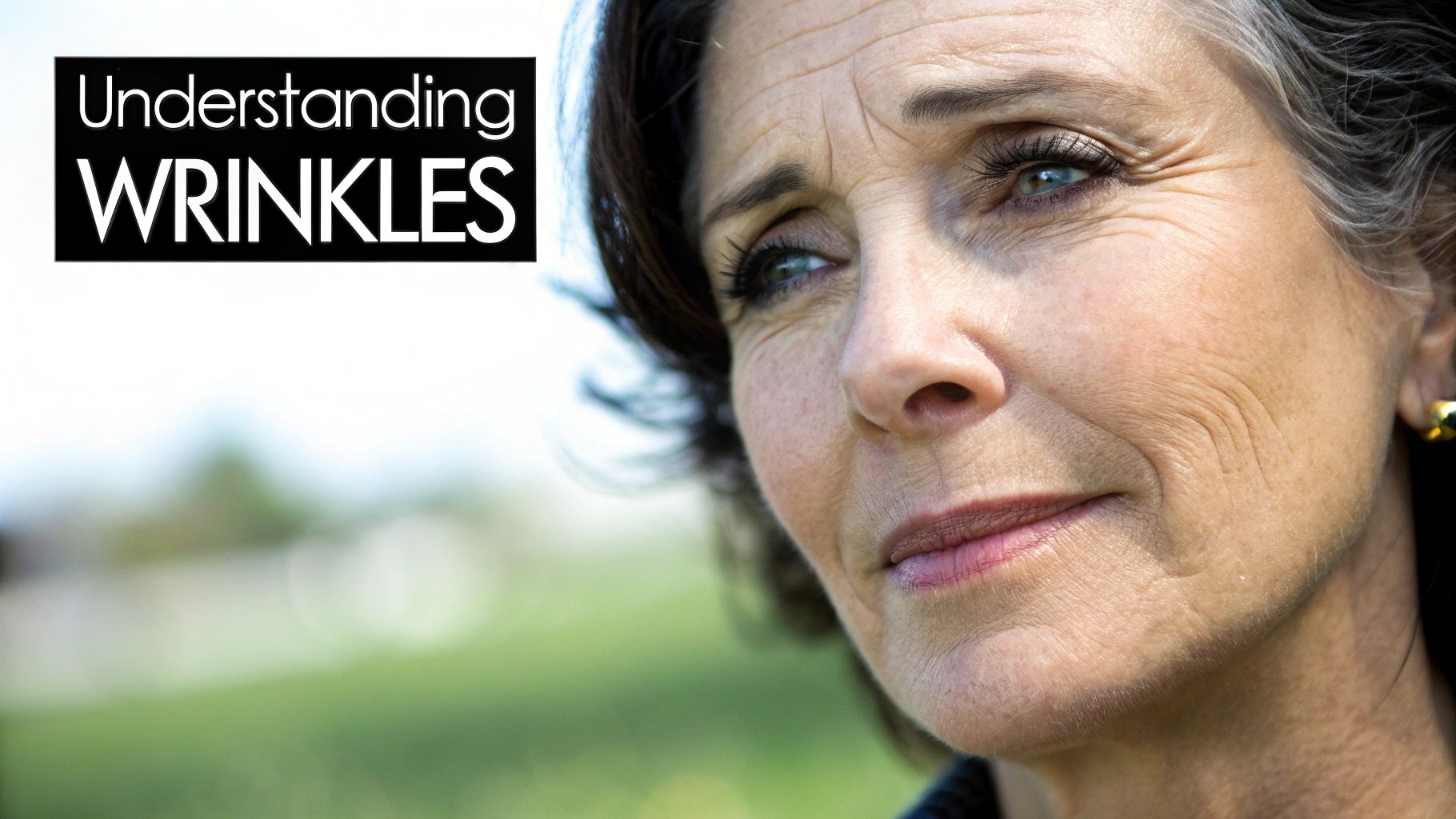
Have you ever noticed that the skin beneath your eyes seems to tell your age story first? There's a good reason for that. This skin is incredibly delicate—roughly 40% thinner than the skin on the rest of your face, making it far more vulnerable to damage and the tell-tale signs of ageing. You can think of it like the difference between a sturdy piece of leather and a fine silk scarf—the silk is bound to show creases much more easily and needs a gentler touch.
On top of that, this area has fewer oil glands and less of the supportive fatty tissue that gives our cheeks their plumpness. This means it dries out more quickly and lacks natural cushioning, creating the perfect storm for wrinkles under eyes to form. Every time you smile, squint at the sun, or concentrate, you're contracting the muscles around your eyes and folding this fragile skin over and over again.
The Science of Skin Ageing
Digging a bit deeper, the real reason for wrinkles lies in the slow-down of two crucial proteins within our skin: collagen and elastin.
Collagen: This is the protein that acts like scaffolding for your skin, giving it structure, firmness, and support. As we get older, our bodies naturally produce less collagen, and the existing framework starts to weaken.
Elastin: Just like its name suggests, this protein gives skin its elasticity. It’s what allows your skin to stretch and snap back into place, like a new rubber band. Over time, elastin fibres break down, and the skin loses that youthful bounce.
When the production of both these proteins declines, the skin under the eyes loses its internal support system. The creases from your daily expressions no longer smooth themselves out, and eventually, they settle in as permanent lines.
The Key Takeaway: Under-eye wrinkles aren't just a surface-level problem. They are a physical sign that the very foundation of your skin—its collagen and elastin network—is weakening due to natural ageing, your lifestyle, and environmental exposure. Understanding this helps you see why just any old cream won't solve the problem.
How Lifestyle and Environment Play a Role
While your genetics and the natural ageing process set the baseline, your daily habits and environment have a huge impact on how quickly and deeply these wrinkles appear.
Sun Exposure: The Primary Culprit
The sun's ultraviolet (UV) rays are, without a doubt, the single biggest factor in accelerating skin ageing. This process even has a name: photoaging. Even on those typically overcast British days, UV radiation gets through, penetrating your skin and actively destroying your collagen and elastin fibres. This damage is always most obvious on the thin, fragile under-eye skin.
UK-specific research backs this up completely. A study in Greater Manchester showed that older adults who spent more time outdoors had more pronounced signs of photoaging, including deeper wrinkles. This tells us that even the moderate but regular sun exposure we get in the UK—from a bit of gardening to just walking to the shops—all adds up over time. If you're interested, you can read the full research about these UK-specific findings to learn more.
Daily Habits That Make a Difference
It’s not just about the sun. A handful of other lifestyle factors contribute significantly to those lines under your eyes:
Repetitive Expressions: Every smile, frown, and squint creates temporary "dynamic" wrinkles. After thousands of repetitions over a lifetime, these can become "static" wrinkles that are visible even when your face is at rest.
Smoking: Tobacco smoke is terrible for the skin. It unleashes free radicals that damage skin cells and constricts blood vessels, starving your skin of the vital oxygen and nutrients it needs to repair itself.
Dehydration: Simply not drinking enough water can make a huge difference. When you're dehydrated, your skin loses its plumpness, which makes fine lines and wrinkles look much more obvious.
Lack of Sleep: Sleep is when your body gets to work on repair and regeneration. Consistently missing out on quality sleep disrupts this crucial cycle and can speed up the ageing process.
Now that we understand exactly why these wrinkles form, the prevention and treatment options we're about to cover will make a lot more sense. You'll be in a much better position to take action that really works.
Practical Ways to Prevent Under-Eye Wrinkles
Understanding what causes those little lines is one thing, but knowing how to stop them from appearing in the first place? That’s where your real power lies. Think of prevention as the best long-term investment you can make for your skin. A few smart habits today can make a world of difference, slowing down new wrinkles and protecting that delicate under-eye skin for years.
These aren't complex secrets or expensive rituals. They are simple, everyday strategies that genuinely work, and you can start right now to build a strong defence for healthier, more resilient skin.
Make SPF Your Daily Non-Negotiable
If you only take one piece of advice away from this, let it be this: wear a broad-spectrum SPF every single day. Without a doubt, it's the most effective thing you can do to prevent premature ageing. So many of us here in the UK save sunscreen for sunny holidays, but those damaging UV rays are out in force even on the greyest, most overcast days.
The skin under your eyes is incredibly thin and fragile, which is why it's often the first place sun damage shows up. Daily sun protection is your best defence, shielding this area from the UV radiation that relentlessly breaks down our precious collagen and elastin.
Prioritise Quality Sleep
That old saying 'beauty sleep' isn't just a myth; it's rooted in solid science. When you're asleep, your body gets to work on repairs. Your skin gets a boost in blood flow, it starts rebuilding collagen, and it mends the damage from daily life—things like pollution and sun exposure.
When you consistently skimp on sleep, you cut that vital repair cycle short. This can spike your cortisol (the stress hormone), which actively degrades collagen, leaving you with duller, less elastic skin. Getting 7-9 hours of quality sleep each night is one of the kindest things you can do for your entire body, but your under-eye area will thank you most of all.
A Practical Tip: Try sleeping on your back. This simple switch can prevent the friction and pressure that etches lines into your face overnight. If you just can’t give up side-sleeping, a silk or satin pillowcase is your next best bet. These smoother fabrics cause much less drag on the skin than cotton, helping you avoid those morning 'creases' that can eventually become permanent.
Re-evaluate Your Lifestyle Habits
Some of our daily habits, unfortunately, can put the ageing process into overdrive. Taking an honest look at these is a massive step toward protecting your skin for the future.
Smoking: This habit is devastating for skin health. It narrows the tiny blood vessels in the top layers of your skin, choking off blood flow and starving your skin of the oxygen and nutrients it desperately needs to stay healthy and repair itself.
Alcohol Consumption: Too much alcohol dehydrates your entire body, and your skin is one of the first places it shows. This dehydration can make existing fine lines and wrinkles look far deeper and more pronounced.
Diet: A diet heavy in sugar and processed foods can cause something called glycation. This is where sugar molecules latch onto proteins like collagen, making them stiff, brittle, and weak. On the flip side, a diet packed with antioxidants from colourful fruits and veg helps your skin fight back against damage.
The link between these habits and wrinkles isn't just theory. One UK-based study found that heavy smokers had nearly double the odds of significant wrinkling around the eyes compared to non-smokers. The same study confirmed that consistent sunscreen use led to a major reduction in under-eye wrinkles, proving these choices have a direct and visible effect.
While these tips are fantastic for preventing fine lines, some wrinkles are caused by the simple act of living and expressing ourselves, like squinting. If you're noticing lines fanning out from the corners of your eyes (the infamous crow's feet), you might need a more targeted approach. For that, you may find our guide on the top 7 best treatments for crow's feet in 2025 especially helpful.
Building Your At-Home Treatment Routine

While prevention is always the best long-term strategy, an effective at-home treatment routine is your first line of defence against the wrinkles under eyes that are already there. Think of it as your personal toolkit for nourishing, protecting, and revitalising that incredibly delicate skin.
A consistent daily routine, armed with the right ingredients, can make a real, visible difference. It’s not about finding a single "miracle" product; it's about layering effective ingredients that work together to support your skin from every angle. Let's cut through the marketing jargon and focus on what genuinely works.
Key Ingredients for Your Under-Eye Skincare Routine
Trying to choose the right eye cream can feel overwhelming. To make it simple, we've broken down the powerhouse ingredients you should be looking for. Each one plays a unique and vital role in tackling wrinkles.
Ingredient | What It Does for Your Skin | Best For Targeting | How to Use It |
|---|---|---|---|
Retinoids (e.g., Retinol) | The gold standard for skin renewal. It boosts cell turnover and stimulates your skin's own collagen production, firming things up from within. | Deeper lines, loss of firmness, and skin texture. | Potent stuff! Start slow. Apply a pea-sized amount 2-3 nights a week, gradually increasing frequency as your skin adapts. |
Hyaluronic Acid | A moisture magnet. This humectant draws water into the skin—holding up to 1,000 times its weight in water—for an instant plumping effect. | Fine lines caused by dehydration, dryness, and crepiness. | Gentle and hydrating, it’s perfect for morning and evening use to keep the area supple. |
Peptides | The "messengers" for your skin cells. These amino acid chains signal your skin to build more collagen and elastin, improving firmness over time. | Loss of elasticity and developing fine lines. | Very well-tolerated. Can be used daily, morning and night, to support long-term skin health. |
Vitamin C | A brilliant antioxidant shield. It protects your skin from environmental damage (like UV rays and pollution) that breaks down collagen. | Dullness, discolouration, and preventing future damage. | Best applied in the morning to provide a protective barrier under your daily SPF. |
By incorporating products with these ingredients, you're creating a comprehensive routine that addresses wrinkles from multiple angles—from plumping and hydrating to rebuilding and protecting.
Beyond Creams: Lifestyle Habits That Make a Difference
Your skincare products can only do so much on their own; they work best when supported by good habits. These simple adjustments can boost your results and improve the health of your under-eye skin over time.
A Gentle Touch is Crucial: The skin under your eyes is the thinnest on your entire body. Always apply products using your ring finger, which naturally has the lightest touch. Gently tap the product into the skin along the orbital bone, moving from the inner to the outer corner. Never rub or drag, as this creates unnecessary stress on fragile skin.
Simple Daily Enhancements
Try a Gentle Massage: When applying your eye cream, use light, tapping motions to boost circulation. This simple step can help reduce puffiness and deliver more oxygen and nutrients to the skin cells.
Invest in a Silk Pillowcase: Cotton can tug at your skin while you sleep, creating 'sleep creases' that may become permanent over time. Silk or satin provides a smooth, frictionless surface that protects the delicate eye area.
While a dedicated at-home routine is brilliant for improving skin texture and softening fine lines, some concerns like deep hollows or significant volume loss are harder to address with creams alone. For these issues, targeted professional treatments can offer more dramatic results. If you're wondering about this, our complete guide to tear trough fillers explains exactly how these treatments work to restore lost volume.
Professional Treatments Available in the UK
When you’ve tried every cream and stuck to a diligent skincare routine but those more stubborn wrinkles under your eyes just won’t budge, it might be time to see what professional treatments can offer. This isn't about making a drastic change; it’s about using powerful, targeted solutions to smooth, rejuvenate, and restore that delicate under-eye area with real precision.
Navigating the world of aesthetic treatments can feel a bit overwhelming, but it doesn't need to be. Let's walk through some of the most effective and popular options available right here in the UK. This way, you'll feel informed and confident when you sit down to chat with a qualified practitioner about your goals.
Injectable Treatments for Smoothing and Volumising
Injectables are often the first port of call for tackling dynamic wrinkles and lost volume. Why? Because they deliver noticeable results with very little downtime, making them an incredibly popular choice for people with busy lives who want to see a real difference.
Anti-Wrinkle Injections
Commonly known by brand names like Botox, these treatments work by temporarily relaxing the tiny muscles around your eyes. These are the very same muscles that contract every time you smile or squint, causing the skin to fold and create expression lines over time. By gently softening these movements, the skin on top gets a chance to smooth out. Your existing lines become less obvious, and new ones are discouraged from deepening.
The procedure itself is surprisingly quick, often taking just 10-15 minutes. It’s a fantastic option for those dynamic wrinkles—the lines that really show up when you move your face. If you're curious, our detailed [guide to anti-wrinkle injections](https://www.youthfulrevival.com/post/a-guide-to-anti-wrinkle-injections) breaks down the entire process from start to finish.
Dermal Fillers and Tear Trough Treatments
As we get older, we don't just lose collagen. We also lose the natural fat pads that cushion and support the area under our eyes. This can create a sunken or hollow look, which in turn casts shadows and makes any wrinkles appear much deeper than they are.
This is where dermal fillers, usually made from hyaluronic acid, can make a world of difference. When an experienced practitioner injects them into the tear trough (the groove running from the inner corner of your eye down your cheek), they restore that lost volume right where it's needed. Think of it like gently plumping up a cushion that has gone a bit flat. The result is a smoother, brighter, and more rested appearance.
Skin Resurfacing and Rejuvenation Procedures
If your main concern is less about volume and more about the skin’s overall texture, tone, and those very fine surface lines, then resurfacing treatments can be incredibly effective. These procedures work by tapping into your skin’s own natural healing and renewal systems.
Microneedling (Collagen Induction Therapy)
Microneedling involves using a device with ultra-fine needles to create thousands of tiny, controlled micro-injuries in the skin. Now, that might sound a bit intimidating, but these tiny channels are precisely what trigger your body's natural healing response. The result is a huge surge in new collagen and elastin production.
Over the following weeks and months, you’ll see a gradual improvement in skin texture and firmness. It essentially thickens and strengthens the skin from within, making it more resilient and helping to smooth out fine lines. It’s a fantastic way to improve the quality of your skin for a longer-term result.
Chemical Peels
A chemical peel involves applying a specialised acid-based solution to the skin, which gently exfoliates the top layers. This process gets rid of dull, dead skin cells and encourages cell turnover, revealing the fresher, smoother skin hiding underneath.
Peels come in different strengths, from light, superficial ones with zero downtime to deeper peels designed for more significant texture problems. A light peel can be a brilliant way to refresh the skin, soften very fine lines, and boost the overall radiance of the under-eye area.
Laser Resurfacing
Laser treatments use focused beams of light energy to either remove the outer layer of skin (ablative lasers) or heat the underlying dermis (non-ablative lasers). No matter the method, the goal is the same: to stimulate new collagen growth. Laser resurfacing is a powerful tool for tackling more significant sun damage and deeper-set wrinkles, delivering impressive improvements in both skin tightness and texture.
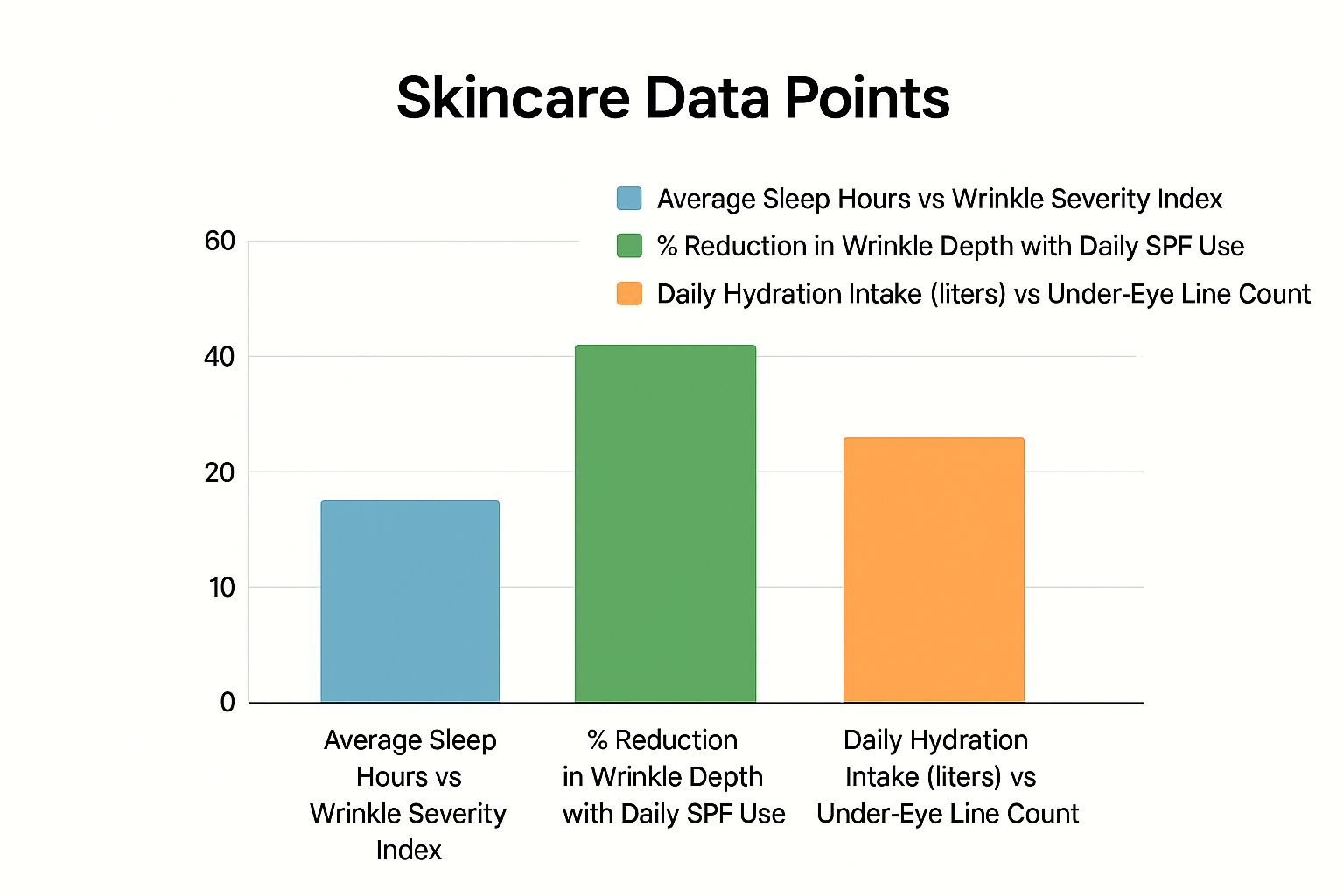
Comparing Professional Under-Eye Wrinkle Treatments
With several excellent treatments available, choosing the right one depends entirely on your specific concerns and goals. This table gives you a quick summary to help you understand the key differences.
Treatment | What It Targets | Average Starting Cost (UK) | Best For |
|---|---|---|---|
Anti-Wrinkle Injections | Dynamic wrinkles (crow's feet from smiling) | From £210 | Softening expression lines and preventing them from getting deeper. |
Dermal Fillers | Volume loss, hollows, and deep-set static wrinkles | From £390 | Restoring lost volume in the tear trough for a fresher, less tired look. |
Microneedling | Fine lines, poor skin texture, and thinning skin | From £155 | Improving overall skin quality, firmness, and texture over time. |
Chemical Peels | Surface-level fine lines, dullness, and pigmentation | From £90 | Brightening the skin and improving very fine lines with minimal downtime. |
Laser Resurfacing | Deeper wrinkles, sun damage, and significant texture issues | From £500 | A more intensive treatment for noticeable skin tightening and smoothing. |
Ultimately, the best approach often involves a combination of treatments tailored to you. A consultation with an experienced aesthetic practitioner is the perfect starting point to create a plan that addresses your unique anatomy and delivers the results you’re looking for.
How to Choose the Right UK Practitioner
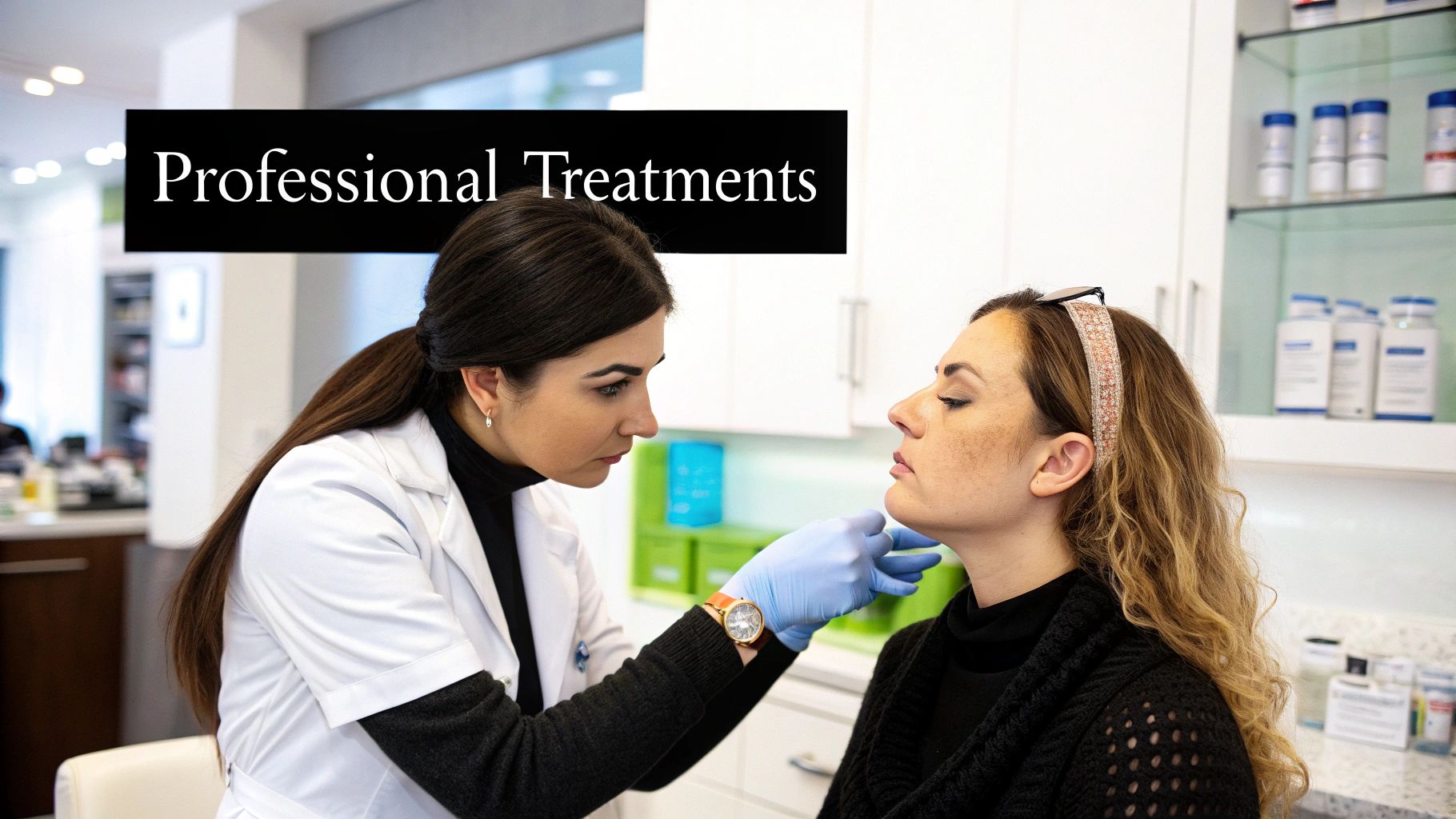
Deciding to explore professional treatments for the wrinkles under your eyes is a big step. But the most important decision you'll make isn't about which treatment to get—it's about who you trust to perform it. Your safety and the quality of your results are entirely in the hands of your chosen practitioner.
Think of it this way: you wouldn't hire a general builder to do intricate electrical work. You'd want a specialist. The aesthetics industry in the UK has patchy regulation, so the responsibility falls on you to do your homework and find a genuine expert.
Verifying Credentials and Qualifications
First things first: check their credentials. This is the absolute baseline for safety and professionalism. Any reputable practitioner will be more than happy to show you their qualifications; in fact, they should be proud of them.
In the UK, you should be looking for specific registrations:
Doctors: Must be registered with the General Medical Council (GMC). You can easily check their status online via the public GMC register.
Nurses: Must be registered with the Nursing and Midwifery Council (NMC).
Dentists: Must be registered with the General Dental Council (GDC).
These registrations are non-negotiable. They confirm the individual has the proper medical training and answers to a professional standards body.
Why This Matters: A registered medical professional possesses a deep understanding of facial anatomy. They know the potential risks and, crucially, how to manage them safely—knowledge that is vital when working on the delicate and complex under-eye area.
The Power of the Portfolio
Once you've confirmed their qualifications, it’s time to look at their actual work. A skilled practitioner will have a comprehensive portfolio of before-and-after photos showcasing their results with real clients. This is your best glimpse into their artistic style and technical skill.
When you're looking through their portfolio, ask yourself:
Is there consistency? Do the results look consistently good across various clients and treatments?
Are the results natural? Pay close attention to the under-eye area. Do the outcomes look smooth and refreshed, or do they look overfilled and obvious? You want a practitioner whose aesthetic matches your own goals.
Are the photos high-quality? The pictures should be taken with consistent lighting and angles to offer a true, honest comparison.
This visual evidence is one of your most powerful tools for judging whether a practitioner can deliver the subtle, beautiful results you’re hoping for.
The Consultation is Key
A thorough consultation is the signature of a great practitioner. This is not a quick sales pitch; it's a detailed medical conversation. They are assessing your suitability for a treatment, and you are assessing their expertise and approach. It should never feel rushed.
Here’s what you should expect during a proper consultation:
A full medical history will be taken.
They will discuss your specific concerns about the wrinkles under your eyes.
They will carefully examine your face and skin quality.
All your treatment options will be explained, including the benefits and potential risks of each.
Your expectations will be managed about what is realistically achievable.
A clear, transparent breakdown of all costs will be provided.
This is your chance to ask questions and get a feel for them. A good practitioner listens, gives honest advice (even if that means saying "no" to a treatment), and makes you feel completely comfortable. If you ever feel pressured or that your concerns are being dismissed, that's a huge red flag. Walk away and find someone who prioritises your well-being.
Your Questions About Under-Eye Wrinkles Answered
Stepping into the world of skincare and aesthetic treatments can feel a bit overwhelming, and it's only natural to have a lot of questions. When it’s about something as specific as wrinkles under the eyes, you absolutely want clear, honest answers before you decide what to do next.
This section is all about tackling the most common queries we hear from our clients every day. My goal here is to cut through the jargon and give you practical insights, so you feel confident and well-informed on your skincare journey.
At What Age Do Under-Eye Wrinkles Typically Appear?
This is easily the question I get asked the most, but the truth is, there’s no magic number. The age you first spot those fine lines depends on a mix of factors completely unique to you. Genetics certainly plays a part – if your parents developed wrinkles on the earlier side, you might be more prone to them too.
But your lifestyle choices are just as important, if not more so. For instance, someone in their late 20s who has spent a lot of time in the sun and smokes could easily have more noticeable lines than a person in their late 30s who has always been religious with their SPF and maintains a healthier lifestyle. As a general rule, most people start seeing the very first whispers of fine lines from their late 20s into their 30s, and these can become more established through their 40s.
The best advice I can give is not to get hung up on a specific age. Instead, focus on smart prevention. Getting into good habits early, like daily sun protection and a solid skincare routine, is your best defence for delaying under-eye wrinkles, no matter what your genes have in store.
Can Drinking More Water Really Get Rid of Wrinkles?
Drinking plenty of water is brilliant for your overall health and your skin will definitely thank you for it, but it’s not a magic eraser for wrinkles that have already set in. The reality is a bit more subtle. When your body is dehydrated, it has to prioritise, so it pulls water from your skin to support your vital organs. This can leave your skin looking dull, feeling tight, and appearing almost shrunken.
Think of the difference between a grape and a raisin. A hydrated grape is plump, smooth, and full of life. A dehydrated raisin is shrivelled and wrinkled. Staying properly hydrated helps your skin cells stay plump and resilient, which can absolutely make existing fine lines—especially those caused by surface dryness—look much softer and less obvious.
So, while upping your water intake won't get rid of deep, structural wrinkles caused by collagen loss, it’s an essential supportive habit. It creates a healthier, more robust canvas, which makes any targeted treatments or products you use work that much better. Think of it as the foundation, not the standalone cure.
Do I Need a Separate Eye Cream?
In a word, yes. I always highly recommend using a cream specifically designed for the eye area. It might seem like a clever marketing ploy to get you to buy another product, but there's solid science behind it.
The skin under your eyes is fundamentally different from the skin on the rest of your face.
It's Thinner: The skin here is up to 40% thinner, which makes it incredibly delicate and more susceptible to irritation.
It Lacks Oil Glands: With very few oil glands, the under-eye area can’t moisturise itself effectively, making it prone to chronic dryness.
It's Highly Active: Just think about how much it moves! Constant blinking, smiling, and squinting put a huge amount of mechanical stress on this fragile skin.
Because of these unique traits, your regular face moisturiser might be too heavy or contain active ingredients at concentrations that are simply too harsh for this sensitive spot, potentially causing irritation, puffiness, or even tiny bumps called milia. Eye creams are formulated to be lighter, absorb more easily, and are packed with ingredients specifically chosen to tackle issues like fine lines and discolouration without overwhelming the delicate skin.
What Is the Best Treatment for Wrinkles Under Eyes?
The "best" treatment is always the one that’s best for you. There really is no one-size-fits-all answer because the lines under your eyes can stem from very different causes. The most effective strategy depends entirely on what’s causing your specific wrinkles.
Here’s a simple way to think about what might be most suitable for your situation:
For Dynamic Wrinkles: If your lines are most obvious when you smile or squint (think crow's feet), anti-wrinkle injections are usually the gold standard. They work by gently relaxing the specific muscles that cause those creases to form.
For Volume Loss and Hollows: If you have that sunken, tired look caused by a natural loss of fat and bone structure over time, dermal fillers placed carefully in the tear trough are often the most transformative solution. They restore that lost volume, lifting the skin and smoothing the entire area.
For Poor Skin Texture: If your main concern is fine, crepey skin and a general lack of firmness, then treatments that boost your skin's own renewal process, like microneedling or light chemical peels, are fantastic. They stimulate new collagen production, helping to thicken and firm up the skin from within.
The only way to know for certain what will work for you is to have a proper chat with a professional. A skilled practitioner can assess your unique facial anatomy and listen to your concerns to create a personalised plan that will give you the best possible results.
At Youthful Revival, we believe in creating bespoke treatment plans that deliver beautifully natural, refreshed results. If you have more questions or you’re ready to explore which options are right for you, we invite you to book a consultation at our Maidenhead clinic. We’re here to help you find your path to confidence.

Comments