
Your Guide to Collagen for Radiant Youthful Skin
- John Wixpartner
- Oct 6, 2025
- 15 min read

Welcome. If you’re here, you’re likely curious about collagen – the protein that’s become the beauty world’s biggest buzzword. But what is it, really? Think of collagen as the very framework of your skin, the scaffolding that gives it strength, firmness, and that youthful glow we all strive for. This guide is your personal roadmap to understanding and nurturing this vital protein. Let's get started.
The Blueprint for Youthful, Radiant Skin
Picture a brand-new, springy mattress. It’s firm, supportive, and bounces right back. The secret is the tightly coiled springs inside. In your skin, collagen fibres act just like those springs, providing the underlying structure that keeps everything smooth, plump, and resilient. That feeling of supple, elastic skin you love? That’s collagen at its best.
But, as with any mattress, time takes its toll. The springs naturally start to lose some of their tension. This process begins in our late 20s, when our body’s own collagen production slows down by about 1% every year. The result is skin that’s a little less firm, a little less bouncy. It's how fine lines and wrinkles start to make their appearance.
This isn’t a story of inevitable decline, though. It’s a guide to empowerment. When you understand how collagen truly works, you can take meaningful steps to support your skin’s health from the inside out. It's about much more than just the creams you apply; it's about nurturing the very foundation of your skin.
Your Journey to Renewed Vitality
My goal here is to move past the simple definitions and give you real, practical knowledge you can use. We’ll explore everything you need to know to protect and replenish this cornerstone protein. Think of this as your personal blueprint, designed to help you:
Understand the Science: We’ll break down why collagen is so important and what really causes it to deplete over time.
Boost It Naturally: Discover the powerful role diet and lifestyle can play in helping your body produce more of its own collagen.
Navigate Products with Confidence: I’ll help you cut through the marketing hype so you can choose supplements and skincare that genuinely deliver results.
Explore Professional Solutions: Learn how advanced treatments at Youthful Revival can give your collagen a significant, targeted boost.
By the time you finish reading, you won’t just know what collagen is; you’ll have a clear, actionable plan. You'll be equipped with the insights to preserve your skin’s structure and unlock a refreshed, more vibrant version of yourself. Your path to radiant, youthful skin starts right now.
Understanding Collagen and Its Role in Your Body
Think of collagen as the essential scaffolding for your skin. It’s the very framework that keeps everything firm, plump, and lifted. This incredible protein is actually the most common one in our bodies, acting like the ‘glue’ that holds our skin, bones, and connective tissues together.
When you have plenty of it, your skin has that wonderful bounce and resilience we associate with youth. It’s strong, smooth, and supple. But here’s the thing – collagen isn’t just one substance. It's a whole family of proteins.
In fact, there are at least 28 different types of collagen, but when we’re talking about keeping your skin looking its best, there are three main players that do most of the heavy lifting.
The Most Important Collagen Types for Your Skin
Getting to know these key collagen types is the first step in understanding how to truly care for your skin from the inside out. Each one has a specific job, and together they create the strong, yet flexible, structure that defines youthful skin.
Let’s take a closer look at the different types and what they do for you. The table below breaks down the main forms of collagen that are most relevant to your skin and overall bodily structure.
Collagen Type | Primary Location in the Body | Main Function and Benefit |
|---|---|---|
Type I | Skin, bones, tendons, ligaments | This is the true superstar, making up 90% of our body's collagen. It provides the fundamental structure and firmness of our skin. |
Type III | Skin, muscles, organs, arteries | Often working alongside Type I, this gives skin its softness and elasticity. Think of it as providing the 'plumpness' factor. |
Type II | Cartilage and joints | While less directly related to skin appearance, this type is vital for cushioning our joints and ensuring they stay healthy and mobile. |
As you can see, Type I is the real powerhouse when it comes to skin. So, when you're looking at supplements or treatments, your main goal is to protect and replenish this type to maintain that youthful integrity.
The infographic below gives a great visual of just how vital these proteins are across the entire body.
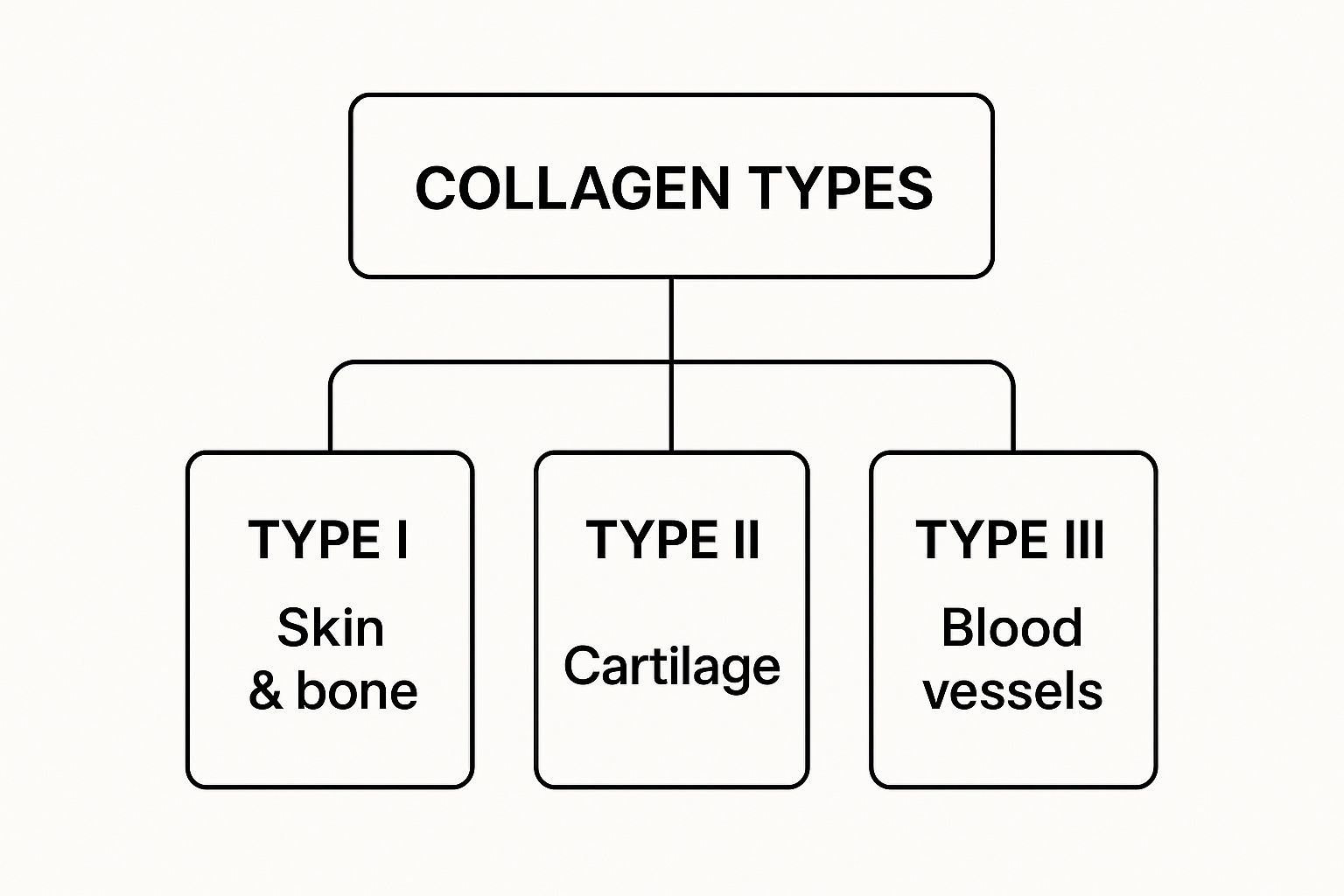
This visual really drives home why focusing on Type I collagen is so central to any effective anti-ageing strategy. It’s the main support system, and keeping it strong is the key.
Why Preserving Collagen Is Essential
Unfortunately, our natural collagen production doesn't last forever. The process starts to slow down once we hit our late twenties. The protein fibres our body produces become thinner and less organised, a bit like a favourite jumper that starts to lose its shape after years of wear.
This gradual weakening of your skin’s support structure is exactly what leads to the classic signs of ageing – fine lines, wrinkles, and a loss of firmness. It isn't an overnight change, but a slow decline in the quality and quantity of the 'glue' holding it all together.
This is precisely why protecting the collagen you already have is every bit as important as stimulating new growth. It's about shifting from a reactive mindset to one of proactive preservation, safeguarding the very foundation of your skin’s health for the long term.
This idea has caught on in a big way. The UK collagen market is set to grow at a compound annual rate of 5.50% between 2025 and 2034, driven by a huge demand for everything from supplements to functional foods. You can read more about these fascinating UK market trends on expertmarketresearch.com.
Ultimately, grasping what collagen does is the first, most powerful step you can take. It’s the 'why' behind all the treatments and lifestyle choices we’ll explore, empowering you to truly support your skin’s youthful revival.
Unpacking the Science: Why Collagen is Your Skin's Best Friend

When you look in the mirror, the story of your skin's health is written right there on its surface. That firmness, smoothness, and youthful bounce? They're all a direct reflection of the dense, healthy collagen network working away beneath. Understanding how this incredible support system can weaken over time is the first step toward reclaiming control of your skin's destiny.
It all comes down to simple biology. As your internal collagen production naturally slows down, the very framework that holds up your skin begins to soften. Those tightly woven fibres lose their strength, which leads to a loss of firmness and elasticity. This is exactly how fine lines start to etch their way into your complexion and why your skin can start to feel less taut than it once did.
But it’s not just about the passing years. Certain lifestyle choices and environmental factors can dramatically speed up this decline, acting as silent saboteurs to your skin's youthful structure.
Meet the Collagen Destroyers
Knowing what works against your collagen is just as powerful as knowing how to build it up. This isn't about creating fear; it's about empowerment. When you can spot these culprits in your own life, you gain the power to proactively protect your skin.
Three of the biggest accelerators of collagen breakdown are:
Sun Exposure (Photoageing): The sun's UV rays are collagen's number one enemy. They set off a chain reaction of damage that not only breaks down existing collagen but also hinders the creation of new fibres. A practical takeaway? Your daily SPF is the single most effective anti-ageing product you can use.
High-Sugar Diets (Glycation): When you eat too much sugar, a damaging process called glycation happens. Sugar molecules latch onto your precious collagen and elastin fibres, turning them stiff, brittle, and weak. Think of it like this: the more sugar you eat, the less flexible and bouncy your skin becomes.
Smoking: The chemicals in tobacco smoke do double damage. They unleash a flood of free radicals that attack collagen head-on, and they also constrict your blood vessels. This starves your skin of the vital oxygen and nutrients it needs to repair itself and build fresh, healthy collagen.
By getting to know these key destroyers, you can start making inspired choices that shield your skin's precious support system. Every time you smooth on sunscreen or opt for a healthier meal, you are actively preserving your youthful glow.
The connection between your lifestyle and your skin's health is undeniable. Protecting the collagen you already have is the most powerful anti-ageing strategy there is, creating a foundation of strength that will serve you for years to come.
How Healthy Collagen Shapes Your Skin
A strong collagen framework does so much more than just prevent wrinkles. It's the secret to maintaining incredible skin hydration and elasticity, right from a deep, cellular level. Healthy collagen fibres create a resilient dermal layer that is brilliant at holding onto hyaluronic acid—your body's own natural moisturiser. This is what gives your skin that dewy, plump, and hydrated look we all crave.
What's more, a well-supported structure ensures your skin can bounce back from daily expressions and environmental stress. If you'd like to dive deeper into this, check out our guide on **how to restore skin elasticity for firmer, youthful skin**. Simply put, strong collagen is the very essence of resilient, radiant skin.
This growing awareness of collagen's vital role is being seen right across the UK. With an expanding population of those aged 65 and over, there's a real surge in demand for products aimed at boosting skin elasticity and joint health. The rise of beauty-focused nutricosmetics, often blending collagen with vitamin C, has seen a huge uptake in cities like London and Manchester, supported by a willingness to invest in wellness solutions that truly work.
Ultimately, the science is crystal clear. Your collagen levels are a direct indicator of your skin's youthfulness. By understanding the forces that deplete it and embracing the habits that protect it, you are no longer just a passive observer of the ageing process. You become an active participant, armed with the knowledge to nurture and preserve your skin's vital structure for a truly timeless radiance.
How To Naturally Boost Your Collagen Production
Getting your skin to glow really starts from the inside out. While professional treatments are fantastic for giving your skin a serious leg-up, the small choices you make every single day are what truly build and protect your precious collagen. Think of this as your personal action plan for turning your body into a collagen-making machine, all with simple, natural strategies.
Imagine your body is a master builder. To construct strong, healthy collagen fibres, it needs the right set of raw materials. You can provide these essential tools through your diet, creating the perfect internal environment for your skin to flourish and repair itself. It’s not about following strict rules; it’s about consciously adding the right kinds of foods to your plate.
This approach puts you firmly in control of your own skin-ageing journey, using the power of good food and smart habits to reveal a more radiant you.
Fuel Your Skin With Collagen Co-Factors
Your body doesn’t just pull collagen out of thin air. It needs specific vitamins and minerals—known as co-factors—to get the production line moving. Without these key players, the whole process grinds to a halt. The absolute superstar here is Vitamin C, a true powerhouse for collagen synthesis.
Picture Vitamin C as the spark plug that ignites the engine. It's utterly essential for linking amino acids together to form those strong pro-collagen strands.
A practical tip is to aim for a splash of colour at every meal. This ensures you're getting plenty of Vitamin C:
Citrus Fruits: An orange for a snack, or a squeeze of lemon in your water.
Berries: Add a handful of strawberries or blueberries to your morning porridge or yoghurt.
Bell Peppers: You might be surprised to learn that red and yellow peppers often pack more Vitamin C than an orange. Slice them up for a crunchy snack.
Leafy Greens: A side of steamed broccoli or a spinach salad with your dinner delivers a fantastic dose.
When you pair these foods with high-quality protein—think chicken, fish, eggs, and legumes—you give your body the full spectrum of amino acids it needs for the build. A simple meal like grilled salmon with steamed broccoli and a squeeze of fresh lemon is the perfect combination of building blocks and co-factors to support your skin from within.
The Power Of Protective Habits
What you eat is only half the story. Your daily habits play a huge role in protecting the collagen you already have from being broken down. A few simple, protective rituals can make a world of difference, making sure all your good dietary work isn’t undone by environmental damage.
Protecting the collagen you already have is just as important as building new stores. Simple lifestyle adjustments are your first and best line of defence against premature ageing, creating a resilient foundation for long-term skin health.
Make these three habits the cornerstone of your skin strategy:
Prioritise Sun Protection: This is the big one. Shielding your skin from UV rays, which are proven to shred collagen fibres, is non-negotiable. Make applying a broad-spectrum SPF every single morning an unshakeable part of your routine—even on cloudy days.
Embrace Quality Sleep: Your body does its most important repair work while you’re sleeping. Getting 7-9 hours of quality rest gives your skin the uninterrupted time it needs to regenerate cells and synthesise new collagen. A practical tip? Try to put your phone away an hour before bed to improve your sleep quality.
Manage Your Stress: Chronic stress floods your body with cortisol, a hormone that actively degrades collagen. Finding ways to unwind that work for you, whether it’s a daily walk, 10 minutes of mindfulness, or a relaxing bath, helps lower cortisol and protects your skin’s structure.
By weaving a nutrient-rich diet together with these protective habits, you create a powerful synergy that supports your skin from every angle. For those wanting to give their skin an extra edge, our targeted [Skin Booster](https://www.youthfulrevival.com/product-page/skin-booster) is designed to complement these efforts, delivering key nutrients to support your skin’s natural vitality. And for those looking for more significant results, advanced medical options like PRP treatments for collagen stimulation are also known to kickstart the body’s own collagen production.
Choosing the Right Collagen Supplements and Topicals

Stepping into the world of collagen can feel a bit overwhelming, can’t it? With a sea of powders, pills, and creams all promising the fountain of youth, it’s easy to feel lost. But finding the right product doesn’t have to be a guessing game. Think of this as your clear, simple guide to cutting through the noise and picking products that will truly make a difference for you.
Your journey to radiant, firm skin is an inspiring one, and choosing the right allies is a huge part of it. It’s all about arming yourself with the right knowledge so you can read labels like a pro and invest in solutions that genuinely support your skin goals.
Decoding Collagen Supplements
When you’re looking at a collagen supplement, you're not just buying a powder; you're investing in something you want your body to actually use. The most important word to get to know here is bioavailability.
Think of it this way: bioavailability is simply how well your body can absorb and put a nutrient to work. A supplement is useless if it just passes straight through your system.
To get the most bang for your buck, look for hydrolysed collagen, which you’ll often see called collagen peptides. This means the collagen has been cleverly broken down into much smaller pieces your body can easily absorb. Your practical takeaway is to always check the ingredients list for the words "hydrolysed" or "peptides".
You’ll also notice different sources on the label. Here's a simple breakdown to help you choose:
Bovine Collagen: Comes from cows. A fantastic all-rounder for skin elasticity and moisture, rich in Types I and III.
Marine Collagen: Sourced from fish. Mostly Type I collagen and boasts the smallest particle size, making it incredibly easy for your body to absorb.
Gelatin: This is simply cooked collagen. Its molecules are much larger, making it harder for your body to absorb compared to hydrolysed peptides. If you're serious about skin benefits, peptides are your best bet.
The demand for these products is soaring. In 2024, the UK's collagen market pulled in about USD 421.5 million, a figure expected to climb to nearly USD 753.0 million by 2030. While gelatin is a big part of that market, it’s the hydrolysed collagen segment that's really turning heads, thanks to its superior absorption and noticeable beauty benefits.
The Truth About Topical Collagen Creams
Right, let's talk skincare. You've definitely seen creams and serums with ‘collagen’ splashed across the label. While these products can be brilliant moisturisers, it’s crucial to understand how they really work. The collagen molecule itself is just too big to sink past the outer layer of your skin.
So, instead of trying to add collagen from the outside in, the smartest topical treatments work by encouraging your own skin to produce more of it. That’s where you get real, lasting, structural improvements.
Your skin is a powerful factory. The best approach with skincare isn't just to slap on a finished product, but to give your factory the high-quality raw materials it needs to build its own strong, healthy collagen.
When you're shopping, keep an eye out for these powerhouse ingredients on your skincare labels:
Retinoids (like Retinol): These Vitamin A derivatives are proven to speed up cell turnover and fire up your skin's collagen-making machinery. They are your go-to for visible results.
Vitamin C: A must-have in your serum. It's an essential building block for collagen and protects the collagen you already have from damage.
Peptides: These clever little chains of amino acids act as messengers, telling your skin it's time to ramp up collagen production.
When you're looking for topicals that give a direct collagen boost, a wonderful example is the Pep Up Collagen Boost Face & Neck Treatment. And for a beautifully crafted night-time routine that supports this whole process, discover our very own **Collagen Anti-Age Night Cream**, designed to work in harmony with your skin’s natural repair cycle.
By choosing products with ingredients that stimulate rather than just coat, you empower your skin to rebuild its own youthful vitality from within.
Your Collagen Questions, Answered
Taking the first step towards understanding collagen is a brilliant move for your skin’s future. It’s only natural to have a few questions as you dive in, and we’re here to give you clear, honest answers so you can feel confident and excited about your journey.
Think of this as a friendly chat where we clear up the confusion. We'll cover everything from how long it takes to see that coveted glow to whether those fancy creams actually work.
How Long Does It Take to See Results From Collagen?
Patience, my friend, is everything. Think of it like nurturing a garden; you can’t expect a beautiful bloom overnight. While every body is unique, most people start to notice the first signs of change – think better skin hydration and a subtle plumpness – within 8 to 12 weeks of consistent daily use.
Why the wait? Well, your body is smart. It sends the collagen peptides where they're most urgently needed first, which might be repairing joints or strengthening tissues. The visible skin benefits, like softer lines and a bit more bounce, tend to follow soon after.
The real secret is consistency. A single dose of collagen won't magically transform your skin, just like one trip to the gym won't build muscle. Making it a non-negotiable part of your daily ritual—like your morning coffee—is what allows those beautiful results to build and reveal themselves over time.
Are There Side Effects to Taking Collagen Supplements?
The good news is that for most people, high-quality collagen supplements are incredibly safe and easy on the system. After all, you're just topping up a protein your body already makes in abundance. When side effects do pop up, they’re usually very minor.
A few people might feel a bit of bloating or a sense of fullness when they first start, but this typically fades as your body gets used to the new routine.
The most important practical insight is to check the source, especially if you have allergies. Always read the label:
Fish or Shellfish Allergies: If you're allergic to seafood, steer clear of marine collagen. Bovine (from cows) or chicken-derived options are a much safer bet for you.
Source Purity: Stick with brands you trust. A reputable company will be transparent about its sourcing, ensuring the product is clean and free from any unwanted extras like heavy metals.
Your health and peace of mind always come first. Before starting any new supplement, it’s always a brilliant idea to have a quick chat with your doctor. They can give you the green light and ensure it’s the right choice for your personal health needs.
Is Vegan Collagen as Effective as Animal-Based Collagen?
This is a fantastic question, and one that comes up more and more. The straight answer is that true collagen protein only comes from animals. But don't let that discourage you! The products you see labelled as 'vegan collagen' are actually very clever "collagen boosters".
Instead of giving your body ready-made collagen, these plant-based formulas provide all the essential tools and raw materials your body needs to fire up its own collagen-making machinery. They're usually a powerful cocktail of specific amino acids, vitamins, and minerals.
You'll often find ingredients like:
Vitamin C: An absolute non-negotiable for collagen synthesis.
Zinc: A key mineral that helps your body build proteins.
Amino Acids: The literal building blocks for creating collagen fibres.
So, while they aren't collagen themselves, these vegan-friendly options are an incredibly effective way to support your body's natural production from the inside out. They're a wonderful choice for anyone living a plant-based lifestyle.
Can Collagen Creams Actually Penetrate Your Skin?
Right, let's clear this one up for good, because understanding this makes you a much smarter skincare shopper. The simple truth is that the collagen molecule is far too large to sink down into the deeper layers of your skin where your own collagen network lives.
When you slather on a collagen cream, it sits on the surface. Now, it can be a lovely moisturiser, making your skin feel hydrated and temporarily look smoother, but it isn't adding to your skin's structural foundation.
For genuine, lasting change from a topical product, you need ingredients that stimulate your skin to make more of its own collagen. It’s like giving your skin’s little factories the blueprints and power they need to get to work. Ingredients like retinoids, vitamin C, and peptides are the real powerhouses here – they're the ones that create real, visible change from within.
At Youthful Revival, we’re passionate about giving you honest, expert guidance to help you feel refreshed and confident in your own skin. Our treatments are all about working with your body to enhance your natural beauty.
Ready to explore what's possible for your skin? Discover our bespoke treatments by visiting us at https://www.youthfulrevival.com.
Comments