
Renew Your Skin With Chemical Peels For Body
- Web Dev
- Dec 16, 2025
- 16 min read

Imagine the feeling of stepping out with skin that's not just clear and glowing on your face, but all over. That's the promise of a chemical peel for the body. This isn't just another treatment; it's a professional technique that uses a specially formulated solution to gently lift away the dull, damaged outer layers of your skin. What’s left behind is the fresher, smoother, and more beautifully even-toned skin that was waiting just beneath the surface.
Imagine Your Skin Reborn And Renewed
Think of this guide as your first step towards that reality. We're going to move beyond the clinical jargon and explore body peels as a practical way to carefully polish away the stories told by sun damage, old scars, or just stubborn rough patches. It's like a reset button for your skin, allowing the real, radiant you to shine through.
You’ve probably heard of peels for the face, but when we apply that same idea to the body, a whole new world of rejuvenation opens up. It’s your chance to finally address those concerns on your back, chest, arms, and legs that you might have thought were there to stay.
Unlocking Your Skin's Potential
Together, we’ll walk through how these treatments work and the specific issues they can resolve. The ultimate goal is to feel absolutely phenomenal in your own skin, and for many people, a body peel is a direct path to getting there. It's a targeted process designed to bring about a complete renewal.
This diagram helps to visualise how we can pinpoint specific concerns to achieve that revitalised result.
It maps out the journey from identifying an issue, like sunspots or scarring, to revealing the sparkling, smooth skin you're hoping for.
Imagine no longer feeling the need to cover up your back or chest. A body peel can address lingering marks from breakouts or sun exposure, giving you the freedom and confidence to wear what you love without a second thought.
We’re going to cover absolutely everything you need to know, including:
The different types of peels and the magic behind how they work.
What you can expect during the treatment itself and the recovery process.
How to properly care for your incredible new skin afterwards.
This guide is here to give you the clarity you need to decide if chemical peels for the body are the right next step for you. It's all about empowering you with the right knowledge, so you can make a choice that truly aligns with your skincare dreams. Let’s begin this journey to unveiling your most luminous skin yet.
How Body Peels Reveal Brighter Skin
Let's break down the magic behind body peels. Think of your skin like a beautiful piece of antique furniture that's been hidden for years under layers of old, dull varnish. A chemical peel for the body is like a master restorer, skilfully and carefully lifting away that worn outer surface to reveal the pristine, vibrant wood beneath. It’s not about creating something new, but about revealing the beauty that’s been there all along.
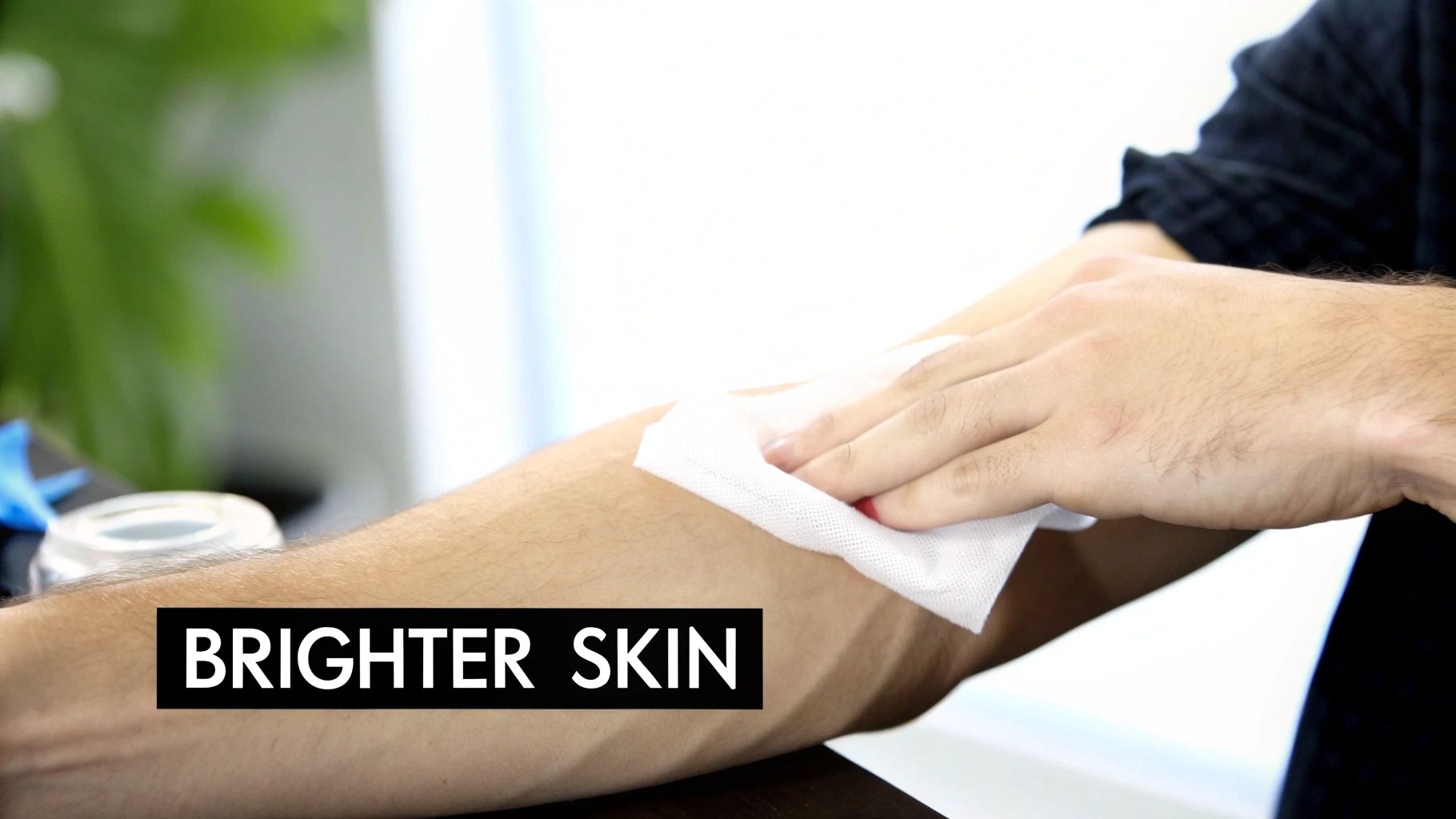
This whole process is driven by expertly formulated solutions containing acids like Glycolic, Salicylic, or Trichloroacetic Acid (TCA). These are the 'skilled artisans' in our furniture analogy. Their job is to gently dissolve the intercellular ‘glue’ that stubbornly holds dead, damaged cells onto the surface of your skin.
When this happens, it triggers a powerful signal deep within your skin. This controlled exfoliation essentially wakes up your skin’s natural renewal cycle, encouraging it to speed up cell turnover and kickstart the production of collagen—the very protein that gives skin its firmness and bounce. What you see in the mirror is fresher, smoother, and visibly healthier skin.
Understanding The Levels Of Renewal
Not all peels are cut from the same cloth. They are categorised by their strength and just how deeply they work. Going back to our piece of furniture, you might use fine-grit sandpaper for a light polish or switch to a coarser grit to tackle more significant imperfections. It’s the same principle.
Superficial Peels: These are the gentlest of the bunch, often called "lunchtime peels" for a reason. They work on the very top layer of skin (the epidermis), making them perfect for tackling minor dullness, rough texture, or slight discolouration. With minimal downtime, they are a fantastic starting point for anyone new to peels.
Medium-Depth Peels: As the name suggests, these peels reach a little deeper into the upper part of the dermis. They are the go-to solution for more noticeable concerns like sun damage, stubborn pigmentation, and even some superficial acne scars. The renewal is more profound, and you can expect a bit more peeling and a longer recovery time.
Your journey begins by understanding that a peel isn't about harsh stripping but about intelligent renewal. It’s a conversation with your skin, prompting it to shed the old and welcome the new. We choose a peel that is strong enough to get results but gentle enough for your skin's specific needs.
Here in the UK, there's a clear preference for these gentler options. Recent market analysis shows superficial peels make up about 45% of the chemical peel market. This highlights a real desire for effective treatments with lower downtime that can be repeated for cumulative, lasting results. You can find more insights into these trends over on Future Market Insights.
Matching The Peel To Your Goals
Choosing the right peel is absolutely key to getting the results you’re dreaming of. A skilled practitioner will be your guide, of course, but knowing the main players empowers you to be an active part of your skincare journey. Different acids are brilliant at tackling different things, from active breakouts to the first signs of ageing.
Choosing The Right Peel For Your Body's Needs
This table gives you a clear snapshot of the most common peels we use for the body, outlining what they’re best for and where they truly make a difference.
Peel Type (Acid) | Best For Targeting | Typical Strength | Ideal For Body Areas Like |
|---|---|---|---|
Glycolic Acid | Dullness, fine lines, sun damage, and uneven texture. | Superficial to Medium | Chest, back, and hands. |
Salicylic Acid | Acne, clogged pores, oily skin, and Keratosis Pilaris. | Superficial | Back, chest, and shoulders. |
TCA (Trichloroacetic Acid) | Deeper pigmentation, sun damage, scarring, and wrinkles. | Medium to Deep | Décolletage, arms, and legs. |
At the end of the day, a chemical peel for the body is a dialogue between science and your skin. By selecting the right acid at the right strength, we can precisely target your concerns, gently lifting away imperfections to let your most vibrant, confident self shine through. Think of it as an invitation for your skin to begin a new, brighter chapter.
Tackling Your Toughest Body Skin Concerns
This is where the real magic of a chemical peel for the body truly shines. It’s not some generic, one-size-fits-all treatment; it's a precise and powerful tool designed to address the specific issues that might be holding you back from feeling your most confident. So, let’s move beyond the theory and look at how this can help you.
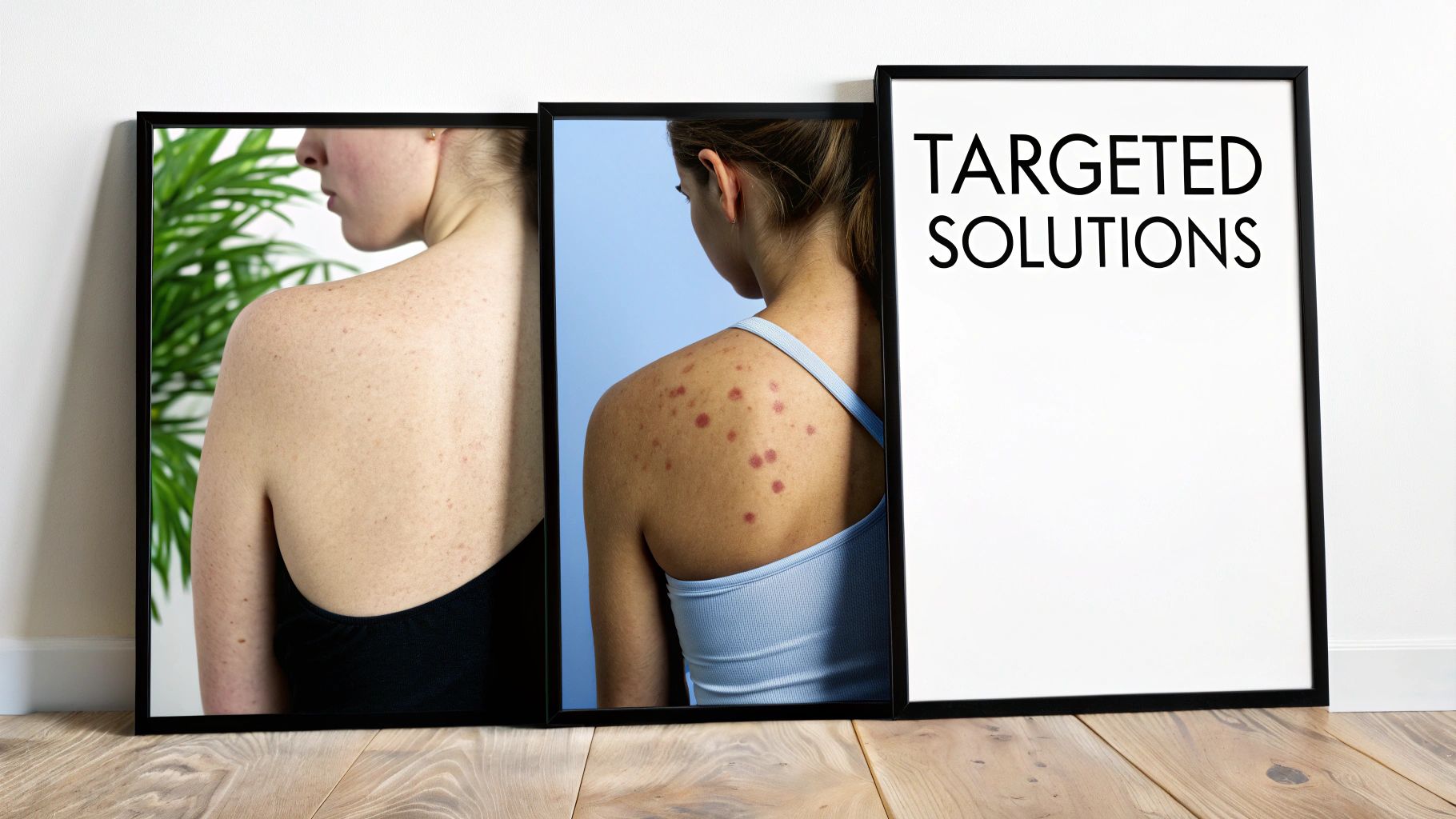
So many of us have areas on our body we instinctively hide. It might be sun spots on the chest, lingering marks from old breakouts on the back, or that stubbornly rough texture on the arms. A body peel lets us zoom in on these problems, delivering a focused solution that brings about visible, lasting change.
This targeted approach is what makes the treatment both safe and incredibly effective. It’s all about applying the right kind of peel to the right area to get the results you’re dreaming of, whether that's brighter skin, a smoother surface, or a more even tone.
Fading Sun Damage on the Décolletage and Hands
The décolletage—that delicate area of your chest and upper neck—along with the backs of your hands, are often the first places to tell the story of past sun exposure. Years of enjoying the sunshine can leave behind a constellation of freckles and dark spots, a condition known as hyperpigmentation. This happens because UV radiation kicks your skin’s pigment-producing cells into overdrive.
A chemical peel, especially one using acids like Glycolic or TCA, works by dramatically speeding up your skin's natural renewal cycle. It gently lifts away the dull, outer layers of skin where this excess pigment has settled.
Think of it like carefully restoring a sun-faded photograph. The peel lifts away the accumulated damage, encouraging fresh, evenly-coloured skin cells to emerge. This means you can finally feel confident in that V-neck top again, without worrying about sun spots.
This process doesn’t just fade existing sun spots; it also helps improve the overall texture and fine lines that often go hand-in-hand with sun damage. The result is a brighter, clearer, and more youthful-looking décolletage and hands, helping your skin's story reflect health and vitality.
Smoothing the Memory of Back Acne
For many people, breakouts on the back or chest can be a source of frustration long after the active spots have gone. They often leave behind stubborn reminders in the form of post-inflammatory hyperpigmentation (PIH)—those persistent red or brown marks—and textural scarring.
This is an area where chemical peels for the body can make a profound difference. Peels formulated with Salicylic Acid are particularly brilliant here. Because it's oil-soluble, Salicylic Acid can get right down into the pores to clear out debris and reduce inflammation, which is fantastic for helping prevent new breakouts.
At the same time, the peel gets to work resurfacing the skin. It encourages the discoloured surface cells to shed while stimulating new collagen in the deeper layers. This dual-action approach not only fades the dark marks but also helps to smooth out shallow scars, gradually restoring a much more refined skin texture.
Conquering Keratosis Pilaris on Arms and Thighs
Often called 'chicken skin,' Keratosis Pilaris (KP) is an incredibly common condition that causes patches of small, rough bumps to appear, usually on the upper arms, thighs, and buttocks. These little bumps are essentially harmless plugs of dead skin cells and keratin—a skin protein—that have become trapped in the hair follicles.
While lotions and scrubs can offer temporary relief, a chemical peel provides a far more effective, long-term solution. Peels containing acids like Salicylic or Glycolic are fantastic because they actually dissolve the keratin plugs causing all that roughness.
The process works in two ways:
Exfoliation: The acid breaks down the "glue" holding the excess keratin and dead cells within the follicle, allowing the plug to be shed.
Smoothing: By promoting rapid cell turnover, the peel helps prevent new plugs from forming, leading to progressively smoother skin over a course of treatments.
This direct action on the root cause of KP can bring about a significant improvement in skin texture, helping you reclaim the smooth, touchable skin you've been missing. It’s a perfect example of how a targeted chemical peel can solve even the most stubborn body skin concerns.
Your Body Peel Journey From Start To Finish
Starting any new treatment can bring up a lot of questions, so let's pull back the curtain and walk through the entire process together, from your first thoughts to your final, glowing results. Think of your chemical peel for the body as a partnership between you and your practitioner—a carefully guided journey designed to replace any nerves with pure excitement for the change to come.
This journey doesn’t actually start with the peel itself. It begins with a simple conversation. Your initial consultation is genuinely the most important step, giving you the space to share exactly what you’re hoping to achieve, ask all your questions, and feel completely understood. From there, we’ll map out a plan that’s built entirely around you and your skin.
Preparing For Your Peel
Once we’ve designed your treatment plan, you'll get some straightforward pre-peel instructions to follow for a week or two. This isn’t about adding complication to your life; it’s about setting your skin up for the very best outcome.
It’s a bit like preparing a canvas before you paint. You want the surface to be perfectly prepped so the peel can work its magic as effectively as possible. This usually just means:
Hitting pause on certain products: We’ll likely ask you to stop using anything too active, like exfoliating scrubs or skincare with retinoids, for a little while. This avoids over-sensitising your skin before the treatment.
Staying out of the sun: Keeping the area we’re treating away from direct sun is key to preventing extra sensitivity and ensuring a safe, even result.
Keeping your skin hydrated: Healthy, happy skin always responds better to treatment, so drink plenty of water.
This little bit of prep work makes a massive difference, ensuring your skin is calm, strong, and ready for its renewal.
What To Expect During The Treatment
On the day itself, the process is surprisingly quick and simple. First, we’ll give your skin a thorough cleanse to make sure it’s free of any oils or daily grime. Then, the peel solution is meticulously applied to the target area—whether that’s your back, chest, legs, or arms.
As the peel gets to work, it’s normal to feel a bit of a tingle, some warmth, or even a mild stinging sensation. Don't worry, this is a good sign! It means the active ingredients are busy dissolving the old bonds holding dull, damaged skin cells in place. The feeling is temporary, usually lasting just a few minutes, and we'll be right there with you to make sure you’re comfortable the entire time.
Understanding The Recovery And Renewal
And now for the exciting part—the recovery. This is where you get to see the proof of all that hard work. I don't like to call it 'downtime'; it's more like 'reveal time,' where you witness your skin's incredible ability to regenerate right before your eyes.
A few days after your treatment, your skin will begin a natural shedding process. This 'flaking' is the magic happening—it’s the old, tired layer making way for the fresh, smooth, and radiant skin you’ve been waiting for. The only rule? Resist the urge to pick!
The timeline for this renewal is pretty predictable:
Day 1-2: The area might feel a little tight and look slightly pink, much like a very mild sunburn.
Day 3-5: This is when the peeling usually kicks in. How much you peel really depends on the strength of the treatment we chose for you.
Day 5-10: The shedding continues for a few more days before gradually stopping, revealing that beautifully smooth, brighter skin underneath.
It's clear that more and more people are discovering the benefits of these treatments. In fact, a recent analysis showed UK imports of chemical peel products shot up by around 11.32% in a single year. It’s a testament to how many clinics, like ours, are seeing a real enthusiasm from clients. You can see more insights into the UK's growing skincare market over at 6wresearch.
We believe in an honest, patient-focused roadmap that helps you feel prepared and empowered, from your first appointment right through to your final, glowing result.
Protecting Your Investment: Post-Peel Care
So, you’ve taken the leap and the peel is done. The feeling of seeing that smoother, clearer skin emerge is fantastic, isn't it? But the journey doesn't end there. The next few weeks are just as crucial, and this is where you become the true guardian of your glow.
Think of your newly revealed skin as a delicate, brand-new canvas. It’s fresh, receptive, and needs a little extra TLC to heal beautifully and ensure those incredible results stick around for the long haul.
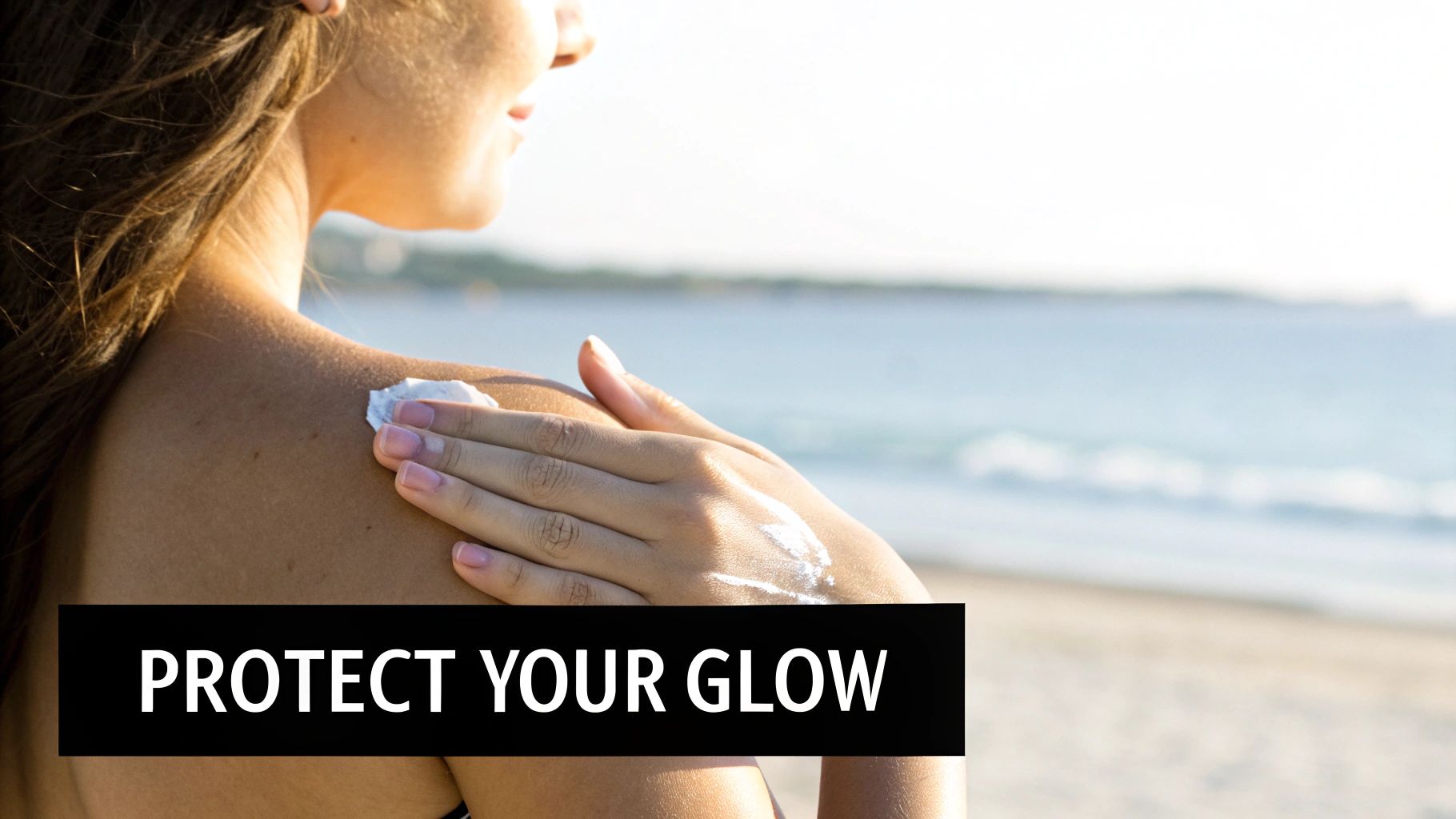
It all boils down to three simple but powerful pillars: keeping your skin hydrated, being incredibly gentle, and committing to sun protection like never before. Get these right, and you'll lock in the benefits of your chemical peels for body and enjoy that radiance for months to come.
The Do's: Your Ultimate Aftercare Checklist
Following your treatment, the goal is to work with your skin's natural healing process, not against it. A little thoughtful care goes a very long way.
Do Moisturise Liberally: Your skin is going to feel tight and thirsty. Listen to it. Slather on a gentle, fragrance-free moisturiser several times a day to soothe any discomfort and give your skin the hydration it craves to repair itself.
Do Use Gentle Cleansers: For at least the first week, stick to cool water and a mild, soap-free cleanser. Forget the washcloths and sponges for now; just use your fingertips, and gently pat the skin dry with a soft, clean towel.
Do Drink Plenty of Water: True hydration starts from the inside. Keeping up your water intake helps your body flush out toxins and ensures your healing skin cells are plump and happy.
The Don'ts: What to Avoid Post-Peel
Knowing what not to do is just as important as knowing what to do. Your skin is vulnerable right now, and avoiding common pitfalls is key to preventing complications and protecting your results.
Your skin is in a state of active renewal. I know how tempting it can be to 'help' the peeling along, but please, resist! The very best thing you can do is be patient and allow your skin to shed completely on its own timeline. This will give you the best, most even result.
Don't Pick or Pull at Peeling Skin: This is the absolute golden rule of post-peel care. Picking at flaking skin can easily lead to scarring or dark spots, which is the very thing we're trying to fix!
Don't Exfoliate: Put away all your physical scrubs, exfoliating acids (like AHAs or BHAs), and any retinoid products. Your skin has just had the ultimate exfoliation. We'll let you know when it's safe to reintroduce them, usually after a few weeks.
Don't Take Hot Showers or Use Saunas: Too much heat can ramp up inflammation and make your skin feel uncomfortable. Stick to lukewarm water in the bath or shower until everything has healed up nicely.
Sun Protection: Your Non-Negotiable Shield
If you take only one piece of advice away from this, let it be this one: you must protect your skin from the sun. Your fresh, new skin is incredibly sensitive to UV rays, and even a little unprotected exposure can create brand new sun damage and pigmentation.
Applying a broad-spectrum, high-factor sunscreen (SPF 50 is what we recommend) every single day is completely non-negotiable. Yes, even when it's cloudy. If you're outdoors for any length of time, you'll need to reapply it regularly. This one simple habit is the most powerful tool you have to protect your investment and keep your skin looking clear and beautiful. To really understand the impact of the sun, our guide to skin treatments for sun damage is a great place to learn more.
Finding A Trusted Professional For Your Peel
Deciding to go ahead with a chemical peel for the body is a brilliant first step. But let's be frank: the success of your treatment and, more importantly, your safety, comes down entirely to the person you choose to perform it. This is not the place to hunt for bargains or take shortcuts. Picking a qualified, experienced professional is the single most critical decision you'll make. It's what separates a glowing result from a story you'd rather not tell.
Think of your practitioner as your guide on this journey. They should be your partner, offering expert knowledge and genuine advice to make sure the treatment is not just effective, but absolutely right for your skin and your goals. When you find the right person, you can relax and feel completely confident that you’re in the best possible hands.
What To Look For In A Practitioner
As you start looking at clinics, there are a few absolute must-haves to check off your list. Consider this your essential safety checklist, ensuring any practitioner you consider meets the highest professional standards.
Proper Qualifications and Certifications: You want to see evidence of real medical or advanced aesthetic training. Look for a doctor, a nurse, or a senior aesthetician who holds specific certifications in advanced skin treatments like chemical peels.
Full Insurance Coverage: Any credible clinic will have comprehensive liability insurance without hesitation. This isn’t just a piece of paper; it’s a fundamental sign of their professionalism and your protection.
A Portfolio of Body Peel Results: It’s easy to find before-and-after photos for facial peels. Insist on seeing their work on body areas. This proves they have hands-on experience with the unique skin on the back, legs, or chest.
Asking The Right Questions During Your Consultation
The consultation is so much more than a price chat; it's your chance to interview your potential practitioner. Arrive with a few smart questions ready to go. This will help you see past the sales pitch and get a real sense of their expertise and whether you click with their approach.
A great consultation should feel like a collaborative conversation. The practitioner's main job is to listen, understand what you want to achieve, set realistic expectations, and put your safety first. If you feel rushed or pressured, that's your cue to walk away.
Here are a few insightful questions to get you started:
Based on my skin, which peel do you recommend for me, and can you explain why you’ve chosen that specific one?
How many body peels have you actually performed for concerns similar to mine?
In your experience, what are the most common side effects people see with this treatment?
What's your plan if I were to have an unexpected reaction? How would you manage it?
Understanding The Cost Of Your Treatment
Finally, let's talk about the investment in your skin. The cost of chemical peels for body in the UK varies, and it’s good to know what you're paying for. Understanding the factors behind the price helps you see the true value in the service.
A few key things will influence the final cost:
The Size of the Treatment Area: It makes sense that treating a large area like the full back will cost more than a smaller patch like the hands.
The Type and Strength of the Peel: More advanced, deeper peels that use specialised formulas will naturally be priced higher than a light, superficial peel.
The Practitioner’s Experience: You are paying for expertise. A seasoned clinician with a fantastic track record will command a higher fee that reflects their skill and the quality of their results.
The interest in treatments like these is definitely on the rise. In fact, market projections suggest that UK revenue from chemical peels is set to grow to around USD 178.9 million by 2030. This trend shows just how many people are looking for effective ways to improve their skin. You can dig into these market insights on Grand View Research. By investing in a highly skilled professional, you ensure you're part of this trend in the safest, most effective way possible.
Answering Your Final Questions
It’s completely normal to have a few more questions buzzing around your mind. In fact, it’s a great sign! Feeling truly informed is the first step towards making a confident decision about your skin, so let's clear up some of the most common things we get asked here at our Maidenhead clinic.
How Many Sessions Will I Actually Need?
This is the big question, and the honest answer is: it really depends on your skin's story and what you’re hoping to achieve.
If you're looking to tackle something like light sun damage on your décolletage or just want to refresh dull-looking skin, you could see a beautiful, noticeable glow after just one superficial peel.
For more persistent concerns, though—think stubborn pigmentation, old back acne scars, or a stubborn case of Keratosis Pilaris—we need to be more strategic. A series of 3-6 treatments is usually the sweet spot. We space these out every four to six weeks, giving your skin time to heal and regenerate between sessions. This approach allows us to achieve much deeper, longer-lasting results. We'll map out a plan that’s right for you during your consultation.
Will It Hurt?
Let’s talk about the sensation. What you'll feel really depends on the strength of the peel we're using. Most of our clients describe a superficial peel as a bit of a tingle or a mild stinging feeling that pops up when the solution is applied and then disappears just as quickly.
A medium-depth peel definitely has a bit more kick. You might feel a strong warmth or a hot sensation that lasts for a few minutes while the peel is doing its job. We’re with you every step of the way, using a fan to cool your skin and making sure you're as comfortable as possible. Any feeling is temporary, and it's very rare to feel sore afterwards.
Think of that brief sensation as the peel waking your skin up. It’s a sign that the active ingredients are getting down to business, kickstarting the whole renewal process. It’s the small trade-off for the gorgeous, smooth skin on its way.
Is Getting a Body Peel in the Summer a Bad Idea?
We can do them, but we generally recommend booking your chemical peels for body in the autumn and winter. The reason is simple: that brand new, baby-soft skin that emerges after a peel is incredibly vulnerable to the sun.
Exposing that fresh skin to strong summer UV rays is asking for trouble. It massively increases your risk of sunburn and can even trigger post-inflammatory hyperpigmentation (which means new dark spots), potentially undoing all the amazing progress you’ve made. If summer is absolutely the only time you can do it, you’ll have to be incredibly strict about using a high-factor, broad-spectrum sun cream and keeping the area completely covered up.
Ready to start your journey to smoother, more radiant skin? At YOUTHFUL REVIVAL, we're here to guide you with honest advice and expert care. Discover how a chemical peel for the body can help you achieve your goals by exploring our treatments at https://www.youthfulrevival.com.
Comments